Your situation
Bankruptcy for the Self-Employed
If you work for yourself, debt can feel harder because your income may change from month to month. Bankruptcy may still be an option, and a licensed attorney can explain how it works in your state.
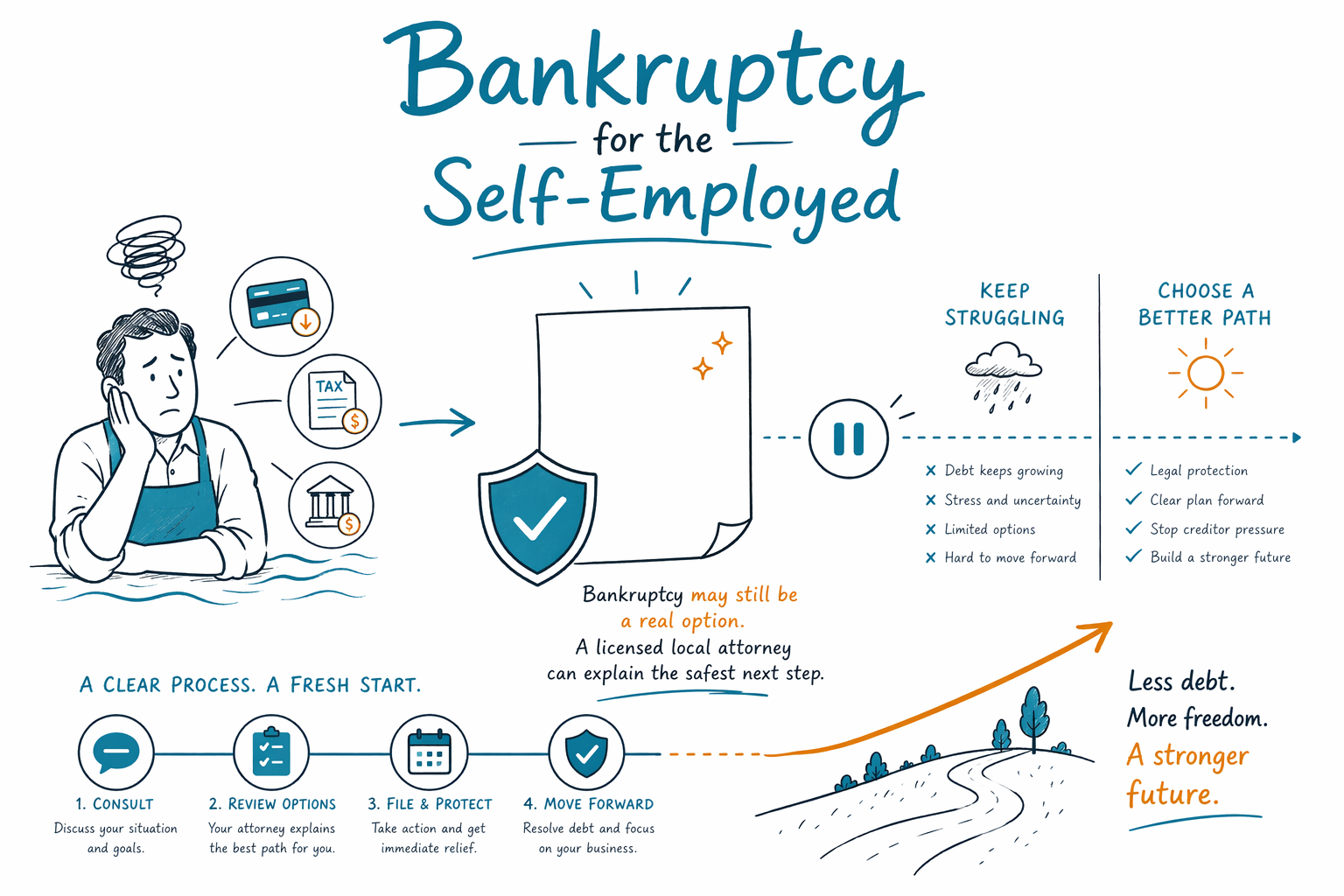
Being self-employed does not block you from filing
Many freelancers, gig workers, contractors, sole proprietors, and small-business owners wonder if bankruptcy is only for people with regular paychecks. It is not. Many self-employed people do file consumer bankruptcy, but the paperwork and income review can be more detailed when income is uneven.
In a consumer case, the court usually looks closely at your personal income, household expenses, debts, assets, and recent financial history. If your business is a sole proprietorship, your personal and business finances may be more connected than you expected. If you own a separate company, such as an LLC or corporation, different rules may apply.
The right chapter depends on the facts. Some people look at Chapter 7 and Chapter 13 options when they are behind on bills, dealing with lawsuits, or trying to stop a garnishment or foreclosure. Bankruptcy law, exemptions, and local practice vary by state and district, so only a licensed bankruptcy attorney in your area can tell you how these rules may apply to your situation.
What makes self-employed bankruptcy cases different
When your income rises and falls, the main question is often not simply "how much do you make?" It is also "how stable is your income," "what is business income versus personal income," and "what documents show the real picture?" An attorney will often want to review recent profit and loss records, bank statements, tax returns, and a basic list of business expenses.
Self-employed people also worry about tools, equipment, a work vehicle, inventory, or money owed by clients. Some property may be protected by exemption laws, but exemptions are different from state to state. What you can keep depends on the chapter you file, the value of the property, the loans against it, and the exemption rules where you live.
Another common issue is separating consumer debt from business debt. Credit cards used for supplies, equipment financing, lease obligations, tax debt, and personal guarantees can all affect the analysis. This is one reason it is important to speak with a licensed bankruptcy attorney instead of guessing.
Chapter 7 vs. Chapter 13 when income is irregular
Chapter 7 is often called liquidation bankruptcy. In many cases, it can help with unsecured debts such as credit card bills, medical debt, and some old utility balances, but it does not erase every kind of debt. Some debts usually survive, including most student loans, recent income taxes, child support and alimony, most court fines, and debts tied to fraud. Whether Chapter 7 is available can depend in part on the means test and your full financial picture.
For self-employed people, the means test can be harder to understand because income may change by season or from job to job. Business expenses may matter, but the way they are treated can depend on the facts and local rules. This is one area where state and district differences matter a lot.
Chapter 13 works differently. Instead of a quick discharge process, it involves a payment plan, usually over three to five years. Some self-employed people prefer Chapter 13 if they are behind on a mortgage or car loan, need time to catch up, or do not qualify for Chapter 7. It can also help some people keep important property while paying debts over time.
If you are not sure which chapter fits, that is normal. You can start with general information about bankruptcy chapters and then speak with a local attorney who can review the details.
What bankruptcy may help stop, and what it may not
When a bankruptcy case is filed, the automatic stay usually begins right away. This legal protection pauses most collection activity, including many lawsuits, wage garnishments, collection calls, bank levies, and foreclosure actions. For a self-employed person under heavy pressure, that pause can create room to breathe.
But bankruptcy has limits. It does not fix every business problem, and it does not guarantee that a business will survive. If your main issue is that the business itself cannot make enough money, bankruptcy may relieve some debt pressure, but it may not solve an unprofitable business model, unpaid taxes, or contract problems.
Also, some actions may need fast attention. If your home is scheduled for foreclosure, if a creditor froze an account, or if you were sued, do not wait to get legal help. Timing matters. A licensed bankruptcy attorney can tell you whether bankruptcy may help, whether another debt-relief option makes more sense, or whether you may need different legal help.
How to prepare before you talk with an attorney
You do not need to organize everything perfectly before asking for help. But a few basic records can make the first conversation easier, especially if you are self-employed.
- Make a simple list of your personal debts and any business-related debts you are personally responsible for.
- Gather recent tax returns, if you have them.
- Bring recent bank statements and a basic profit-and-loss summary if possible.
- Write down what property matters most to you, such as your home, car, tools, equipment, or business account.
- Note any urgent deadlines, like a foreclosure sale, court date, repossession risk, or garnishment.
- Be ready to explain whether your business is a sole proprietorship, LLC, corporation, or other structure.
It is also wise to ask whether the lawyer regularly handles consumer bankruptcy cases for self-employed clients. You can confirm that the attorney is licensed in your state through your state bar. CleanSlate Match can help you get connected, but CleanSlate Match is a free matching service, not a law firm, not a lawyer, and does not file bankruptcy or create an attorney-client relationship.
What it may cost, and how CleanSlate Match works
Many consumer bankruptcy attorneys charge a flat fee for Chapter 7 or Chapter 13 work, plus the court filing fee and a small required credit-counseling fee. The real cost depends on the chapter, how complex the case is, whether you are self-employed, how much documentation is needed, and the court district. These ranges are general information, not quotes.
In many areas, Chapter 7 attorney flat fees often range from about $1,000 to $2,500 or more, depending on complexity. Chapter 13 attorney flat fees are often higher, sometimes around $3,000 to $6,500 or more, with local rules affecting how fees are handled. Court filing fees are separate and are commonly a few hundred dollars. A required credit-counseling course usually costs a small additional amount.
Self-employed cases can cost more when records are incomplete, income is irregular, there are tax issues, there is a business entity involved, or there are questions about property, equipment, or recent transfers. Ask for a clear explanation of fees before you hire anyone.
CleanSlate Match is always free for the person looking for help. We only collect contact information and general intent, such as your name, phone number, optional email, state, preferred language, and a general description of your situation. We do not ask for a Social Security number, bank-account numbers, credit-card numbers, or detailed account balances. If you want, you can get matched with a licensed bankruptcy attorney near you, or explore other debt situations first.
If you are self-employed and drowning in debt, bankruptcy may still be a real option, and a licensed local attorney can explain the safest next step.
Common questions
Can I file bankruptcy if I am a freelancer or gig worker with no regular paycheck?
Yes, many self-employed people file bankruptcy. Irregular income can make the analysis more detailed, but it does not automatically prevent you from qualifying.
Will I lose my business if I file?
Not always. Some people keep working and keep important business property, but what happens depends on the chapter, the type of business, the value of the property, and your state's exemption rules.
Can bankruptcy erase my business debt?
Some debts may be discharged, but not all debts qualify. Outcomes depend on the case, and some debts usually survive, including most student loans, recent income taxes, child support and alimony, most court fines, and debts from fraud.
Does bankruptcy stop lawsuits, garnishments, or foreclosure?
Once a case is filed, the automatic stay usually pauses most collections, lawsuits, garnishments, and foreclosure actions. There are exceptions, and timing matters, so get legal help quickly if something urgent is happening.
Do I need to share all my financial account details with CleanSlate Match?
No. CleanSlate Match only collects contact information and general intent so we can help connect you with a licensed attorney. We do not ask for your Social Security number, bank-account numbers, credit-card numbers, or similar account details.
Is CleanSlate Match my lawyer?
No. CleanSlate Match is a free matching service, not a law firm and not your lawyer. It does not file bankruptcy and does not create an attorney-client relationship.
Related help
How the automatic stay and Chapter 13 can pause foreclosure and help you keep your home.
Open → Bankruptcy When Your Wages Are Being GarnishedHow filing can stop a garnishment quickly and protect your paycheck.
Open → Bankruptcy When You're Buried in Medical DebtHow bankruptcy treats medical bills and why it's one of the most common reasons people file.
Open →