Guides
Can i keep my house in bankruptcy?
Sometimes you can keep your house in bankruptcy, but it depends on your equity, the type of bankruptcy (Chapter 7 vs Chapter 13), your state’s exemptions, and whether you can stay current. You’ll have clearer answers after a licensed attorney reviews your situation.
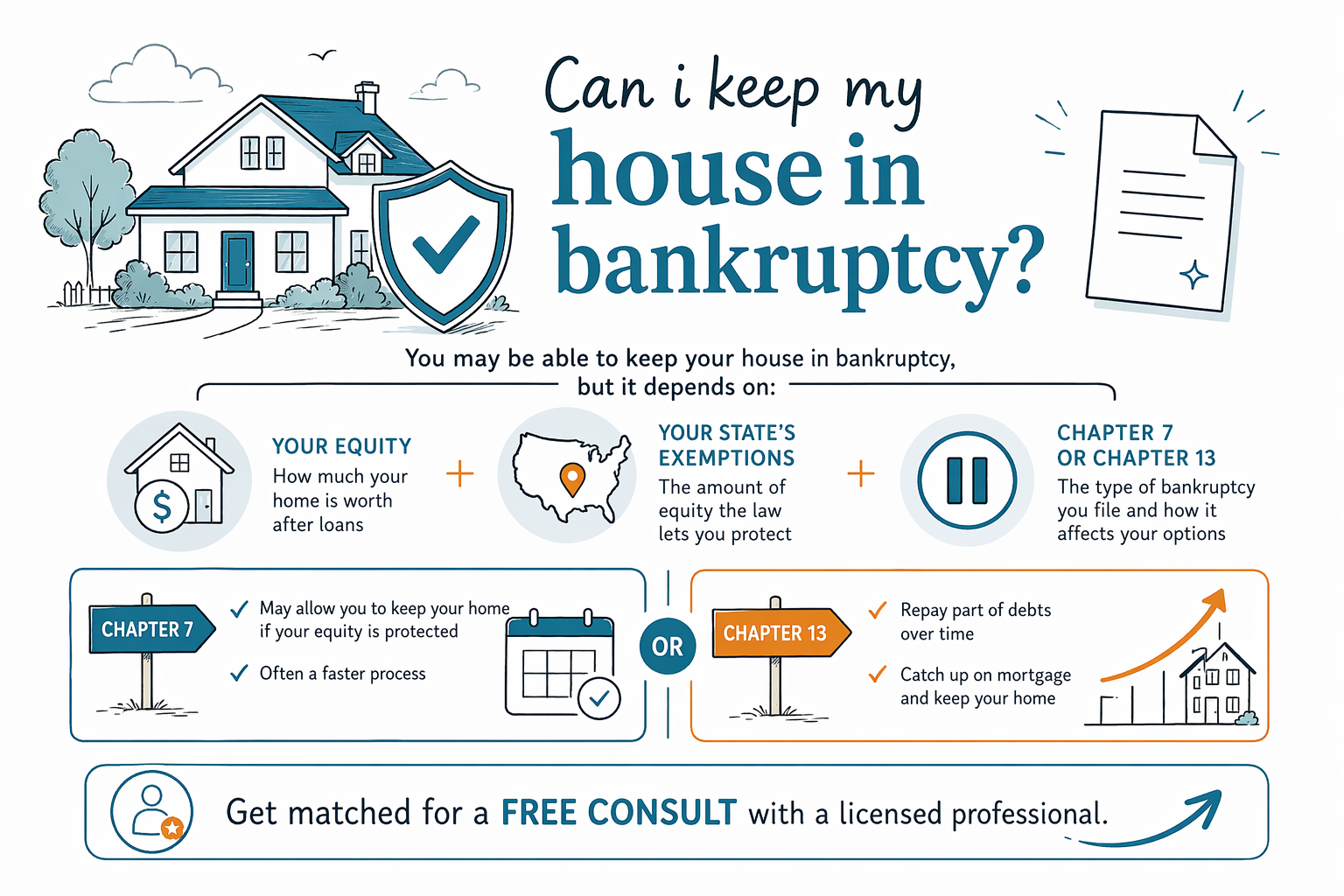
The direct answer: yes, but it’s not automatic
Yes—many people are able to keep their home after filing bankruptcy. The most important factors are (1) how much equity you have in the home, (2) your state’s exemption rules, and (3) which bankruptcy chapter you file.
Bankruptcy is not a “one-size-fits-all” house saver. Some people can keep the home, others can’t, and sometimes people can keep it only through a plan to catch up missed payments.
CleanSlate Match is a free matching service that can connect you with a licensed bankruptcy attorney near you. We can’t file your case and we aren’t your lawyer, but we can help you get a real, case-specific answer.
Chapter 7 vs Chapter 13: the biggest difference for keeping a home
If you file Chapter 7, the goal is usually to discharge eligible debts. Whether you keep your house often depends on whether the equity can be protected under your state’s exemption rules—and whether you keep paying the mortgage going forward.
If you file Chapter 13, the goal is often to stop foreclosure and create a court-approved payment plan. Chapter 13 commonly lets people catch up on past-due mortgage payments over time while continuing to make regular mortgage payments.
Which chapter fits depends on your income, your debts, and the details of your case. A licensed bankruptcy attorney can explain the best fit for you in your state and the specific bankruptcy court district.
Exemptions and “equity” (why the numbers matter)
In many cases, a person can keep property in bankruptcy up to the value allowed by state exemptions. For a house, what matters is often your equity—roughly, the home’s value minus what you still owe.
If your equity is low enough (or can be protected by exemptions), the house may be kept. If there’s high unprotected equity, the outcome can change—though outcomes vary a lot by state, the type of assets involved, and how your case is handled.
Because exemptions vary by state and court district, it’s important not to rely on generic online estimates. Your attorney can review your home value, mortgage balance, and exemption options in a way that applies to your location.
Stopping foreclosure and garnishment: what can happen right after filing
One good reason people act quickly is the automatic stay. When a bankruptcy case is filed, it generally pauses many collection actions, including foreclosure activity and many lawsuits.
For many homeowners, this pause can create breathing room to work out the next steps—like confirming whether Chapter 13 is an option to catch up, or how to stay current if you choose another route.
Important: the stay doesn’t eliminate the mortgage itself. Even when foreclosure pauses, you typically still need to address the mortgage through payments (and, in Chapter 13, through the plan for arrears). Your attorney can explain what you must do in your specific case.
Debts that bankruptcy usually does not erase (including some housing-related limits)
Bankruptcy can be very helpful, but it doesn’t erase every type of debt. Many debts often survive bankruptcy, including most student loans, recent income taxes, child support and alimony, many court fines, and debts involving certain types of fraud.
For housing, bankruptcy may help with past-due amounts and collection pressure, but it generally does not allow you to simply stop paying the mortgage forever. Your ability to keep the house depends on staying current (and possibly catching up) under your chosen chapter.
Because outcomes depend on the facts, ask a licensed bankruptcy attorney what portion of your situation is likely dischargeable and what must be repaid or continued. Rules vary by state and judicial district.
What it costs to talk to a bankruptcy attorney (so there are no surprises)
Most consumer bankruptcy attorneys charge a flat fee, plus the court filing fee and a small required credit-counseling fee. The total you pay depends on the chapter (Chapter 7 or Chapter 13), the complexity of your case, and the bankruptcy court district.
As rough ranges (not quotes): the court filing fee is often a few hundred dollars for Chapter 13 and a few hundred dollars for Chapter 7, and the attorney’s flat fee can vary widely based on the work involved. Your best next step is to request an exact estimate after your consultation.
CleanSlate Match is free for you. Participating attorneys pay a flat fee to take part in the program, and it is always free for people in debt—there’s never a percentage of your debt and never a share of any fees from you.
You may be able to keep your house in bankruptcy, but it depends on your equity, your state’s exemptions, and whether you file Chapter 7 or Chapter 13—so get matched for a free consult with a licensed attorney near you.
Common questions
If I’m behind on my mortgage, can I still keep my house in bankruptcy?
Often, yes—especially with Chapter 13, which can allow you to catch up past-due payments through a court-approved plan while you keep making ongoing mortgage payments. With Chapter 7, keeping the house depends more on exemption protection and staying current. A local licensed bankruptcy attorney can explain what’s realistic for your state and district.
Will I definitely keep my home once I file?
No—there’s no guarantee. Keeping a house depends on equity, state exemptions, the chapter you file, and your ability to continue mortgage payments. Your attorney can review your details and tell you the likely outcomes for your case.
Does bankruptcy wipe out my mortgage?
Usually, no. Bankruptcy may pause foreclosure and help deal with certain debts, but the mortgage itself typically continues. Many people still must make mortgage payments (and may repay arrears in Chapter 13).
Are the rules about keeping a house the same everywhere?
No. Bankruptcy exemptions, procedures, and how courts apply rules can vary by state and by the federal judicial district. That’s why it’s important to talk with a licensed bankruptcy attorney near you.
Related help
A plain-language comparison of the two main consumer bankruptcies, when each makes sense, and how a lawyer helps you decide.
Open → What Debt Bankruptcy Can and Can't EraseWhich debts bankruptcy wipes out, which ones survive (like most student loans and child support), and why it matters.
Open → Will I Lose My House or Car in Bankruptcy?How exemptions and the two chapters affect your home and car — and why many people keep both.
Open →