Your situation
Bankruptcy for Overwhelming Credit-Card Debt
If credit cards feel like they’re running your life, you’re not alone. CleanSlate Match can help you connect with a licensed bankruptcy attorney near you to understand whether Chapter 7 or Chapter 13 may fit your situation.
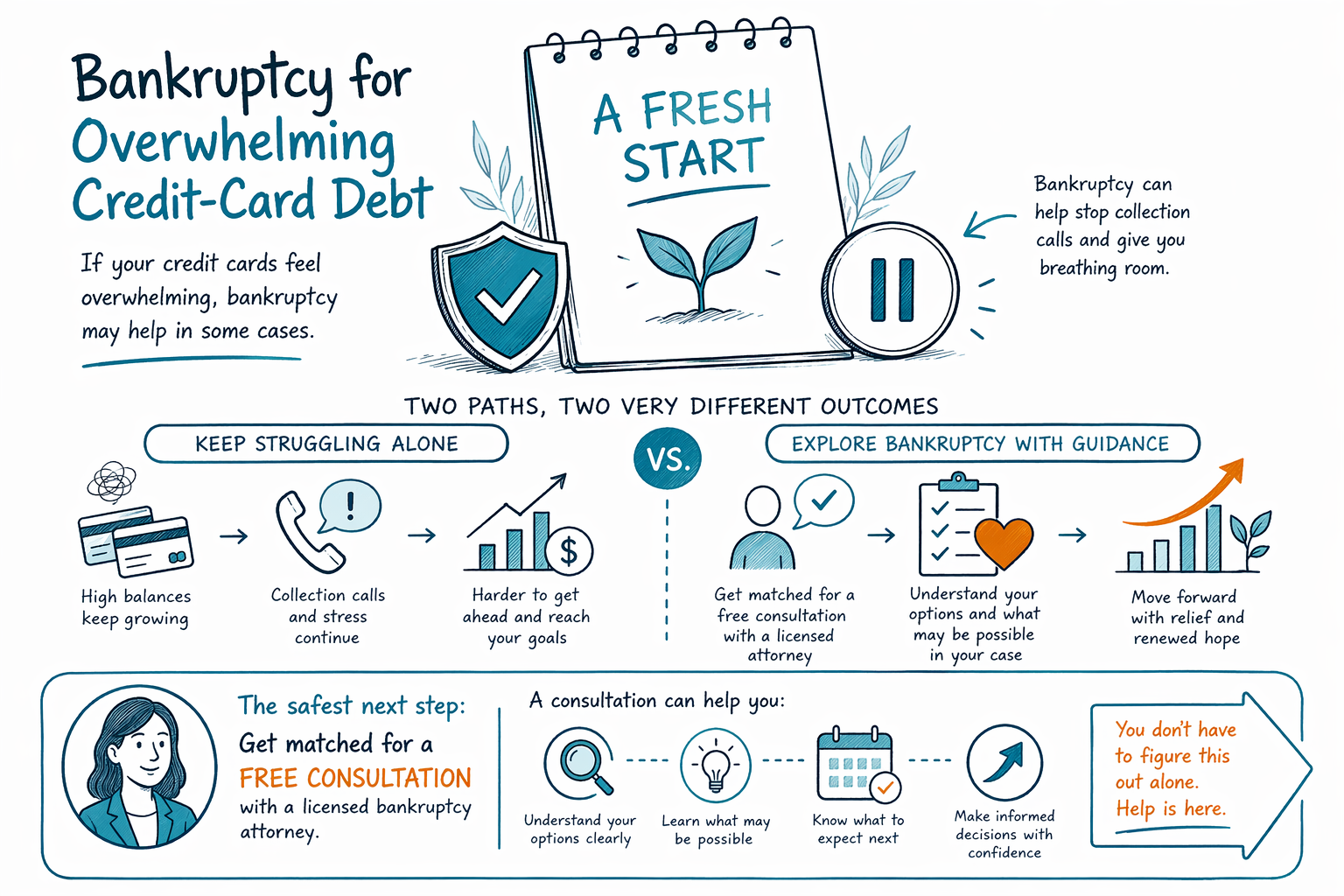
Unsecured credit-card debt can be a “good fit” for bankruptcy—if you qualify
Credit-card debt is usually considered “unsecured” debt. In many cases, bankruptcy can reduce or discharge eligible unsecured debts, giving people a real path to a fresh start.
But bankruptcy isn’t one-size-fits-all. Whether you can file Chapter 7, whether Chapter 13 is better, and how much (if any) of your credit-card debt is erased depends on your full situation—including your income, your timing, and rules in your state and federal judicial district.
CleanSlate Match is a FREE matching service (not a law firm, not a lawyer). We only help you connect with a licensed bankruptcy attorney who can review your facts and explain your options in plain language.
Chapter 7 vs. Chapter 13 for credit-card debt (plain, honest differences)
Chapter 7 is often called the “get a reset” chapter. If you qualify under the means test, eligible unsecured debts (like many credit cards) may be discharged, and most collection activity stops as soon as the bankruptcy is filed.
Chapter 13 is a “repayment plan” chapter. Instead of getting a discharge right away, you typically make monthly payments for a period of time under a court-approved plan. For some people, Chapter 13 can help you catch up on certain debts and keep certain property while still addressing credit-card debt through the plan.
Your attorney will explain which chapter matches your income situation and goals. Bankruptcy rules and eligibility vary by state and district, so it’s important to confirm your path with a licensed bankruptcy attorney in your area.
What can happen to your credit-card collection and lawsuits after you file
In most consumer bankruptcy cases, filing creates an “automatic stay.” That usually pauses many collection actions, including calls and collection letters, many lawsuits, and garnishments.
If a creditor already sued you or got a judgment, bankruptcy may still help stop enforcement while your case is handled in court. That said, not every creditor action is the same, and some issues depend on timing and the type of debt.
Because you may be dealing with collection pressure right now, the most practical first step is to talk to a licensed bankruptcy attorney as soon as possible. They can check what’s already happening in your case (for example: whether there’s a pending lawsuit or wage garnishment) and explain how an automatic stay may apply in your specific situation.
Important limits: bankruptcy usually isn’t a blanket wipeout of every debt
Bankruptcy can often reduce or discharge eligible unsecured credit-card debt, but outcomes depend on the individual case. Some debts usually survive bankruptcy protections, including most student loans, recent income taxes, child support/alimony, many court-related fines/penalties, and debts involving certain fraud or misconduct.
Also, bankruptcy won’t undo every problem overnight. For example, you may still have to deal with secured debts (like car loans or mortgages) through exemptions, reaffirmation, or a repayment plan—depending on the chapter.
If you’re hoping for a specific result (“all my credit cards will be erased”), no attorney can ethically promise that in advance. A good consultation will be realistic: they’ll review what’s likely to be dischargeable and what isn’t, based on your facts.
What to do next if you’re buried in credit-card debt
Right now, the goal is to move from panic to clarity. A bankruptcy attorney can review your situation and explain which chapter—if any—fits.
- Gather basic information you already know (no account numbers required): which credit cards and debts you have, whether any lawsuits are pending, and what bill collectors are doing.
- Note critical dates: when you missed payments, any court dates, and whether you’ve received notices about wage garnishment.
- Make a short list of your goals: discharge credit-card debt, stop collection calls, keep your home/car, or set up an affordable plan.
- Get matched for a consultation with a licensed bankruptcy attorney using Get matched.
If you want a more general overview first, you can also browse Chapters and key differences to understand the basics before your meeting.
How to find and choose a licensed bankruptcy attorney (and what it may cost)
CleanSlate Match connects you with licensed bankruptcy attorneys near you for an initial consultation. We do not file bankruptcy and we do not represent you. It’s the attorney’s job to evaluate your facts, confirm eligibility, and explain your legal options.
When you talk to an attorney, ask about:
- Whether Chapter 7 or Chapter 13 is more likely for your credit-card debt
- Whether the means test will affect your options (rules vary)
- Whether an automatic stay is likely to pause the collection actions you’re seeing
- Which debts are usually dischargeable in your type of case, and which may survive
Cost: Most consumer bankruptcy attorneys charge a flat fee for a case, plus the required court filing fee and a small credit-counseling fee. Total cost can vary by the chapter and complexity (for example, number of creditors, property issues, or a Chapter 13 plan amount) and by district. A common range for attorney + court-related fees is often in the low-to-mid thousands for a straightforward case, but your local attorney will confirm the exact amount after the consultation. Flat-fee ranges are not quotes, and timelines and outcomes are never guaranteed.
If your credit cards feel overwhelming, bankruptcy may help in some cases, and the safest next step is to get matched for a free consultation with a licensed bankruptcy attorney who can explain what it can and can’t erase in your situation.
Common questions
Will bankruptcy stop credit-card collectors from calling me?
In many cases, filing triggers an automatic stay that pauses many collection efforts after the case is filed. The exact effect depends on what stage your collections or lawsuits are in, so a bankruptcy attorney should review your notices and dates.
Will Chapter 7 wipe out my credit-card debt?
Many unsecured credit-card debts are dischargeable in Chapter 7 if you qualify, but bankruptcy outcomes depend on your full situation and the specific debts involved. Some debts usually survive bankruptcy, and some outcomes depend on exemptions and other case details.
If I don’t qualify for Chapter 7, is Chapter 13 the only option?
Not always. Chapter 13 is one common path when Chapter 7 isn’t available, but there may be other debt options depending on your circumstances and goals. A licensed bankruptcy attorney can explain what fits in your state and district.
I’m new to the US—how do I protect myself when I’m overwhelmed with debt?
Start by getting accurate, local information from a licensed bankruptcy attorney in your area. Avoid sharing sensitive financial-account details; CleanSlate Match only collects contact and general intent (like your preferred language and state), and the attorney can guide you on what they need for the consultation.
How do I confirm an attorney is properly licensed?
Ask for their bar admission details and confirm they are licensed to practice in the federal bankruptcy courts for your area. You can also check the state bar and, when appropriate, federal court admission records—your attorney should be able to confirm this clearly.
Related help
How the automatic stay and Chapter 13 can pause foreclosure and help you keep your home.
Open → Bankruptcy When Your Wages Are Being GarnishedHow filing can stop a garnishment quickly and protect your paycheck.
Open → Bankruptcy When You're Buried in Medical DebtHow bankruptcy treats medical bills and why it's one of the most common reasons people file.
Open →