Your situation
Bankruptcy When You're Being Sued for a Debt
If you’ve been sued for a debt, it can feel terrifying and urgent. CleanSlate Match is a free service that helps you connect with a licensed bankruptcy attorney near you to discuss your options.
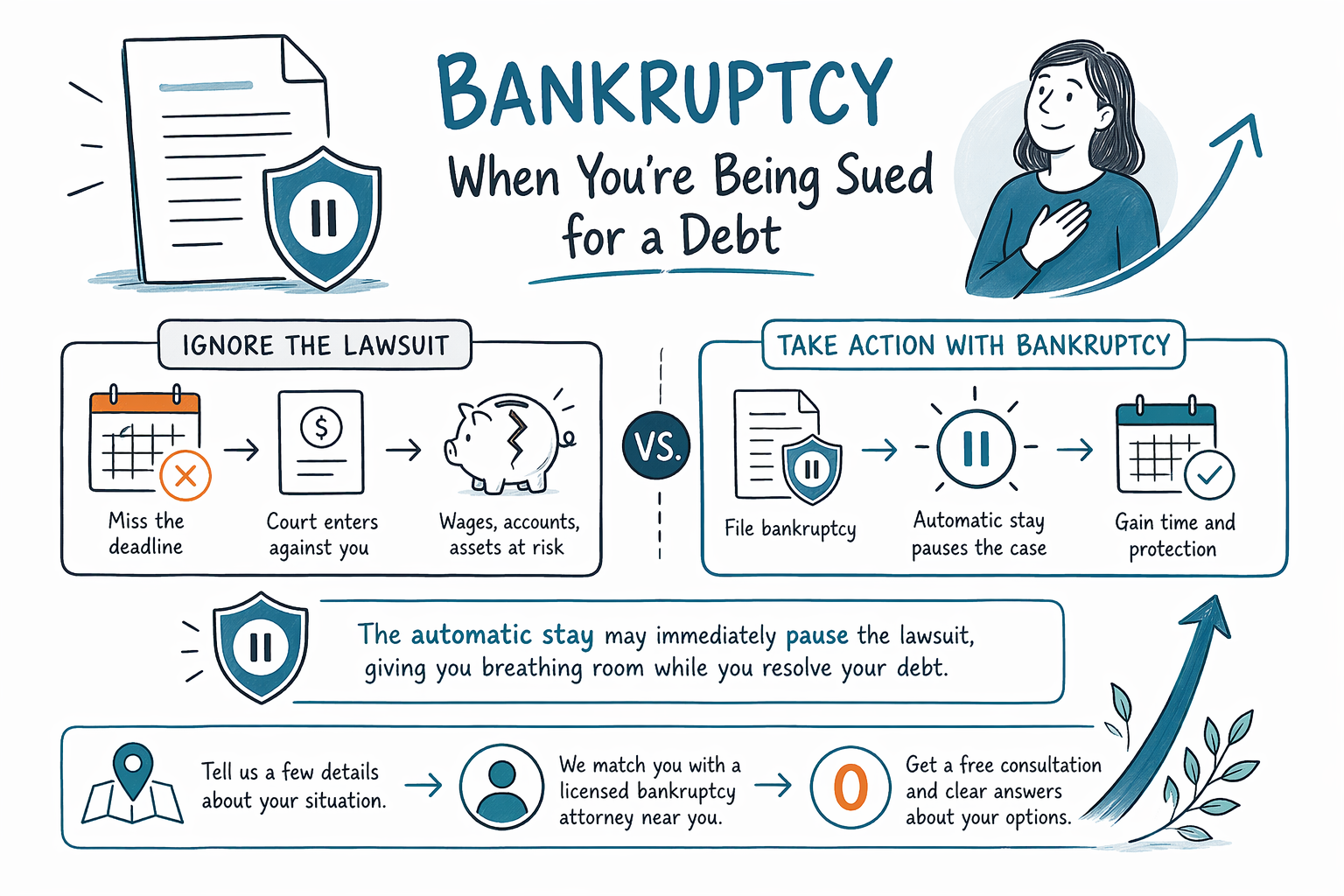
First: don’t ignore the lawsuit papers
When you’re served with a complaint or court notice, it usually comes with a deadline to respond. Missing that deadline can lead to a default judgment, which may make the situation harder to resolve later.
Take a breath, gather the documents, and write down the key dates: when you were served, any hearing dates, and any response deadlines. If you don’t understand the papers—especially if you’re new to the US—an attorney can explain what each step means.
Bankruptcy is not the only option, but it may be an important one. If you want to explore it, the next sections explain how bankruptcy can affect a lawsuit and what to do while you’re getting help.
- Keep all letters, summonses, and court notices together in one folder
- Write down every deadline you see on the paperwork
How bankruptcy can affect a debt lawsuit (the automatic stay)
In many consumer cases, filing bankruptcy triggers what’s called the “automatic stay.” That stay is designed to pause many collection actions, including many lawsuits about debts, the moment the bankruptcy case is filed.
This means: if the creditor filed the lawsuit, they often must stop pursuing it while the bankruptcy is active. In some situations, court rules may allow the lawsuit to continue (for example, in limited types of claims). An attorney can explain what applies to your specific case.
Bankruptcy rules are federal, but important details—like exemptions and procedure—vary by state and even by the federal court district. That’s why it’s so important to talk with a licensed bankruptcy attorney in your area.
- The automatic stay can pause many lawsuits after a bankruptcy is filed
- Exceptions can exist—confirm with a licensed bankruptcy attorney
Chapter 7 vs. Chapter 13 for people being sued
Chapter 7 is often discussed when someone wants to discharge (eliminate) certain eligible debts and does not need a payment plan to catch up. Whether your debts are eligible depends on the type of debt and your individual circumstances.
Chapter 13 is often considered when someone can make payments through a court-approved plan. It may help people manage arrears and sometimes protect assets in a structured way. Chapter 13 also generally keeps you under the court’s supervision for a period of time, which can change how creditors can act.
If you’ve been sued, the “best” chapter depends on more than just the lawsuit. Your income, expenses, prior filings, the type of debt, and what the creditor is seeking all matter. A bankruptcy attorney can go through the facts and explain realistic outcomes—honestly—without promises.
- Chapter 7 and Chapter 13 work differently—your facts decide which fits
- Eligibility and outcomes depend on the specific debt and your situation
Common questions when you’re being sued for a debt
“Will bankruptcy make the lawsuit go away?” Often, the automatic stay can pause the lawsuit after filing, but not every case is identical. The creditor may still seek specific relief from the court, depending on the claim.
“Will bankruptcy erase every debt?” Usually not. Some debts often survive bankruptcy or may not be dischargeable in the same way—such as most student loans, recent income taxes, child support/alimony, many court fines, and debts involving certain wrongdoing. The only safe answer is a case-by-case review by a licensed bankruptcy attorney.
“Do I need to show up in court right now?” It depends on the notice you received and any upcoming dates. In many situations, you should not ignore court deadlines. An attorney can tell you whether you should appear and how filing timing might affect what happens next.
“Can I do this if I’m new to the US?” Yes, many people in the US file bankruptcy even when they’re not native English speakers. You deserve clear explanations in your preferred language. A reputable attorney can also discuss how court communication will work for you.
- Not all debts are dischargeable—ask an attorney about your specific debt type
- Court deadlines still matter; don’t rely on “later” if your papers say otherwise
What to do next (a simple, safe checklist)
Here’s a practical way to move forward without feeling overwhelmed:
- Collect your documents: the summons/complaint, any scheduling orders, and all correspondence from the creditor or their attorney.
- Mark deadlines on your calendar and note any court dates.
- If language is a barrier, choose a preferred language for your consultation.
- Get general educational information and learn about chapter options at chapters.
- Ask to speak with a licensed bankruptcy attorney near you. If you want help finding one, start with get-matched through CleanSlate Match.
- Confirm the attorney is licensed to practice bankruptcy law in your state and federal district.
Bankruptcy can be a fresh start for many people, but it’s not magic. The right attorney can explain what may pause your lawsuit, what may be discharged, what you might still have to pay, and what steps you should take before and after filing.
- Confirm the attorney is licensed—don’t assume
- Use your consultation to understand outcomes, not just the process
How to find a licensed bankruptcy attorney (and what it may cost)
CleanSlate Match is a free matching service, not a law firm and not a lawyer. We help you connect with a licensed bankruptcy attorney who can review your facts and explain your options.
Most consumer bankruptcy attorneys charge a flat fee for the legal services, plus the required court filing fee and a small required credit-counseling fee. The total cost range can vary by chapter (Chapter 7 vs. Chapter 13), case complexity, and your court district. The exact number depends on your situation, so any amount you’re quoted should be reviewed carefully. A licensed attorney can also tell you what factors may increase or decrease the cost in your case.
Important: participating attorneys pay a flat fee to take part in the program, and it is always free for you. There’s no commission, no percentage, and no payment tied to the amount of debt.
Before you decide, ask these fair questions in your consultation:
- What chapter do you recommend and why?
- What parts of my debt may be dischargeable, and what parts may not?
- How does an automatic stay apply to my lawsuit?
- What are the total estimated costs (attorney fee, court fee, and any required fees)?
- What steps should I take before filing?
If you’re facing foreclosure, wage garnishment, or other collection actions alongside the lawsuit, you can also browse more situations at situations.
- Expect flat-fee attorney services plus court and required fees (ranges vary)
- CleanSlate Match helps you get matched—an attorney must review and advise your case
If you’re being sued, don’t ignore the deadline—learn how bankruptcy’s automatic stay may pause the case, then get matched for a free consultation with a licensed bankruptcy attorney near you.
Common questions
I was served—should I file bankruptcy immediately?
Timing matters because lawsuits have deadlines. In many cases, filing can trigger an automatic stay that pauses many collection actions after the case is filed, but exceptions and local procedure can apply. A licensed bankruptcy attorney can review your papers and help you choose the safest timing.
Will bankruptcy stop the lawsuit and any future collection calls?
Filing bankruptcy can pause many lawsuits and collections through the automatic stay, including many communications from creditors. However, not every action is stopped in every case, and some creditors may seek permission to continue. Your attorney can explain what is likely in your situation.
What if I can’t afford an attorney right now?
Many bankruptcy attorneys use flat-fee arrangements, and the total cost depends on chapter and complexity, plus the court filing fee and required credit-counseling fee. Ask about payment options during your consultation, and discuss your full situation honestly.
If some debts usually survive bankruptcy, does that mean bankruptcy is pointless for me?
Not necessarily. Even when not every debt is eliminated, bankruptcy can still help by pausing collections, reorganizing obligations, and addressing eligible debts. A case-by-case review with a licensed bankruptcy attorney is the only way to know what relief is realistic.
Is CleanSlate Match a law firm?
No. CleanSlate Match is a free matching service that helps you connect with a licensed bankruptcy attorney near you. We do not file bankruptcy and we do not provide legal representation.
Related help
How the automatic stay and Chapter 13 can pause foreclosure and help you keep your home.
Open → Bankruptcy When Your Wages Are Being GarnishedHow filing can stop a garnishment quickly and protect your paycheck.
Open → Bankruptcy When You're Buried in Medical DebtHow bankruptcy treats medical bills and why it's one of the most common reasons people file.
Open →