Free guides
The Monthly Budget Worksheet
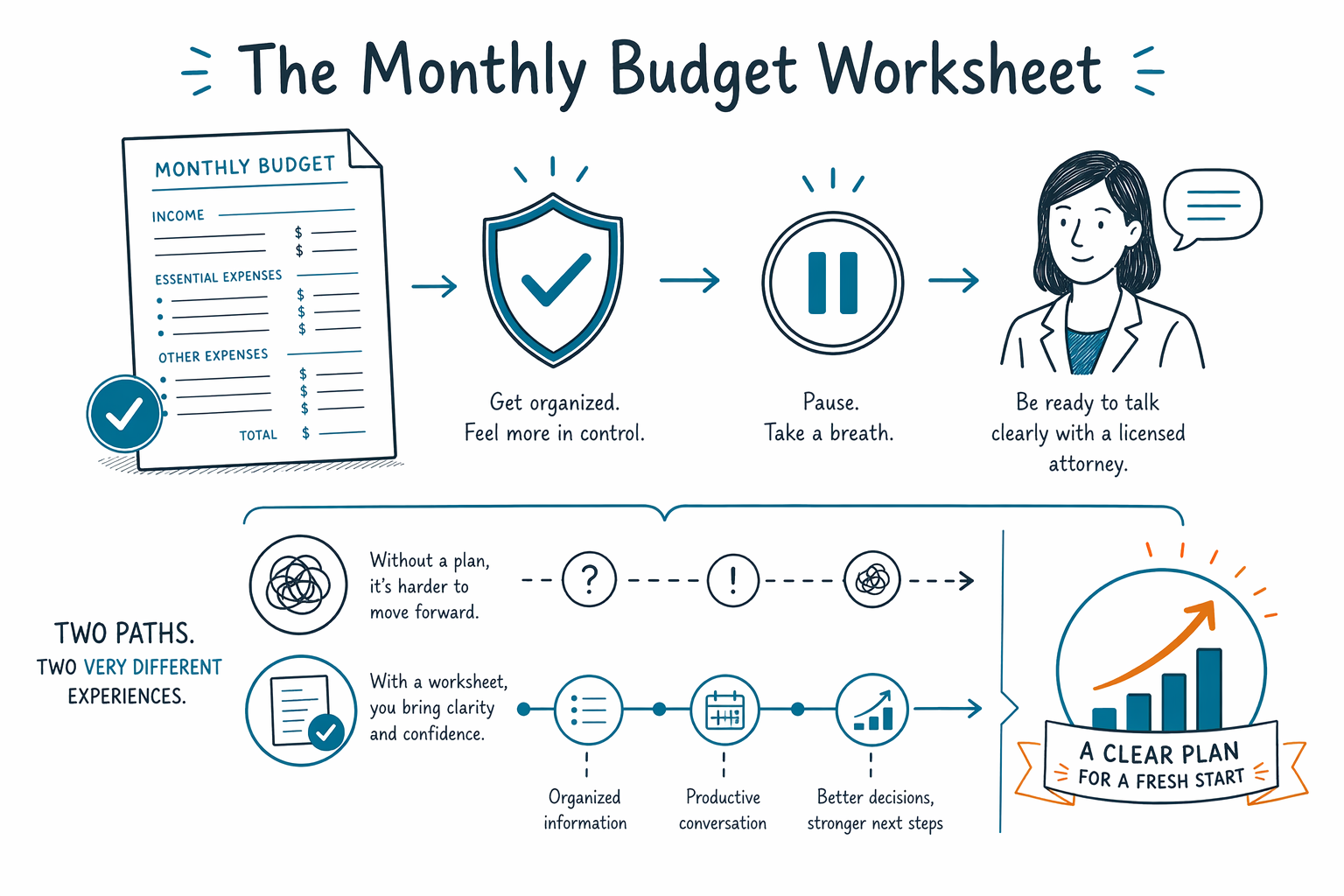
This free worksheet helps you see, in one place, what comes in and what goes out each month. It can make credit counseling, a Chapter 13 discussion, or a first meeting with an attorney feel more organized and less overwhelming.
What this worksheet is for
When debt is piling up, many people do not have a clear monthly picture anymore. Bills may be due on different days, income may change, and it can be hard to tell what is essential, what is flexible, and what is simply behind. This worksheet is a simple place to write down your regular income and expenses so you can understand your situation more clearly.
It can be especially helpful if you are thinking about bankruptcy, debt relief, or trying to stop a wage garnishment, lawsuit, or foreclosure. A monthly budget is often useful in pre-filing credit counseling, and it can also help you prepare for a conversation about Chapter 13, where a repayment plan is based in part on your income, expenses, debts, and goals.
This is general educational information only. Bankruptcy rules, the means test, Chapter 7, Chapter 13, and exemption rules vary by state and judicial district and can change over time. CleanSlate Match is a free matching service, not a law firm and not your lawyer, and this worksheet is not legal, tax, or financial advice.
What is inside the free PDF
The worksheet is designed to be practical and easy to use, even if you feel stressed or are starting from scratch. It gives you a place to list the money coming into your household and the main categories where money goes each month.
You will usually see space for items like wages, self-employment income, benefits, child support received, rent or mortgage, utilities, food, transportation, insurance, medical costs, childcare, minimum debt payments, and other regular household expenses. There is also room to note irregular expenses so they do not surprise you.
The goal is not perfection. The goal is to create a reasonable snapshot you can bring to counseling or a licensed bankruptcy attorney. If you want more background first, you can read our general guides and learn more about chapters.
- Income section for regular monthly household income
- Expense section for housing, food, transportation, medical, and other basics
- Space for debt payments and irregular costs
- A simple way to compare what comes in with what goes out
Who this helps most
This worksheet is for anyone who feels financially stretched and wants a calmer starting point. It can help if you are behind on credit cards, medical bills, a car loan, rent, or a mortgage, or if you are worried about collections, a lawsuit, foreclosure, or garnishment.
It is also useful for people who are considering consumer bankruptcy but are not sure where to begin. Chapter 7 and Chapter 13 work differently. In general, Chapter 7 focuses on qualifying rules and what property is protected by exemptions, while Chapter 13 involves a repayment plan over time. A clear monthly budget can help you and an attorney discuss which path may fit your situation.
If English is not your first language, a written worksheet can also help you slow down and organize your thoughts before a legal consultation. You do not need to be "good with money" to use it. You only need a quiet moment and your best estimate.
How to use it before meeting an attorney
You do not need exact numbers to begin. Start with your usual monthly amounts and improve them later if needed. If income changes from month to month, use an honest average based on recent months.
A licensed bankruptcy attorney may ask questions about your household budget because it helps them understand what you can realistically afford, whether a Chapter 13 plan may be possible, and what documents you may need next. This worksheet can save time and reduce stress in that first conversation.
- Gather recent pay stubs, benefit letters, bills, rent or mortgage statements, and utility notices.
- Write down all regular household income.
- Write down basic monthly living expenses first: housing, food, utilities, transportation, insurance, and medical costs.
- Add debt payments such as credit cards, personal loans, car loans, taxes, or support obligations.
- Note anything urgent, like a foreclosure sale date, wage garnishment, repossession risk, or lawsuit.
- Bring the worksheet to your consultation and ask what matters most in your state and district.
If you want to speak with someone after filling it out, you can get matched for free with a licensed bankruptcy attorney near you.
What this worksheet can and cannot tell you
A budget worksheet can help you spot problems and prepare for a serious conversation. It may show that you are short every month, that a payment plan is not realistic, or that you need to ask about options quickly. But it does not tell you by itself whether you qualify for Chapter 7, what a Chapter 13 payment would be, what property is protected, or which debts may be discharged.
It is also important to be honest about limits. Bankruptcy can help many people, and filing a case creates an automatic stay that usually stops most collection calls, wage garnishments, lawsuits, and foreclosure actions while the case is pending. But bankruptcy does not erase every debt in every case. Some debts usually survive, including most student loans, recent income taxes, child support and alimony, most court fines, and debts tied to fraud.
Many people do keep their home or car through exemptions or, in some cases, through a Chapter 13 plan. Still, outcomes depend on the facts of the case, the chapter filed, local rules, and the choices made along the way. That is why this worksheet is a starting tool, not a promise.
What a bankruptcy consultation may cost
Many consumer bankruptcy attorneys charge a flat fee rather than billing by the hour, but the amount depends on the chapter, the complexity of the case, and the local court district. These are not quotes, and prices can change.
For many straightforward Chapter 7 cases, attorney flat fees are often in the rough range of about $1,000 to $2,500, plus the court filing fee, which is commonly around $338, and a small required credit-counseling and debtor-education cost. Chapter 13 attorney fees are often higher because the case lasts longer and involves a repayment plan; in many areas, flat fees may be roughly $3,000 to $6,500 or more, plus a court filing fee commonly around $313 and the required course fees.
Fees can go up if the case involves business income, recent property transfers, tax issues, motions, multiple properties, disputed debts, or other complications. The best next step is to ask for a written explanation of fees and what is included. CleanSlate Match is always free for the person seeking help. We are a free matching service, not a law firm, and we do not file bankruptcy cases.
When you speak with any attorney, make sure the lawyer is licensed in your state, and confirm that license with the state bar before you hire anyone.
This free budget worksheet helps you get organized before credit counseling or a bankruptcy consultation, so you can talk with a licensed attorney more calmly and clearly.
Common questions
Do I need exact numbers before I download this worksheet?
No. Best estimates are fine to start. You can update the numbers later when you have pay stubs, bills, or statements in front of you.
Will this worksheet tell me if I should file Chapter 7 or Chapter 13?
No. It can help organize the information a lawyer may ask about, but it cannot decide which chapter fits your case. Bankruptcy rules vary by state and district, and a licensed bankruptcy attorney should review your specific situation.
Can bankruptcy erase all of my debts?
No. Some debts usually survive, including most student loans, recent income taxes, child support and alimony, most court fines, and debts based on fraud. What happens in a case depends on the facts, the chapter filed, and local rules.
What does CleanSlate Match do?
CleanSlate Match is a free matching service that helps connect people with a licensed bankruptcy attorney in their area. We are not a law firm, not your lawyer, and using the service does not create an attorney-client relationship.
What information do I need to share to get matched?
Only contact information and general intent, such as your name, phone number, optional email, state, preferred language, and a general sense of your situation. You should not provide Social Security numbers, bank-account numbers, credit-card numbers, or other financial-account details to get matched.
Related help
A free, printable checklist of the documents to gather before you meet a bankruptcy attorney.
Open → Chapter 7 vs Chapter 13 Decision WorksheetA free worksheet to help you weigh which chapter may fit your situation before you talk to a lawyer.
Open → The Means Test Prep GuideA free plain-language guide to the income figures and paperwork the means test looks at.
Open →