How we've helped
A homeowner stops foreclosure with Chapter 13
When you’re behind on a mortgage, it can feel like there’s no way out. This anonymized story shows one person’s general path toward Chapter 13—starting with questions, then getting matched, then confirming costs with a licensed attorney.
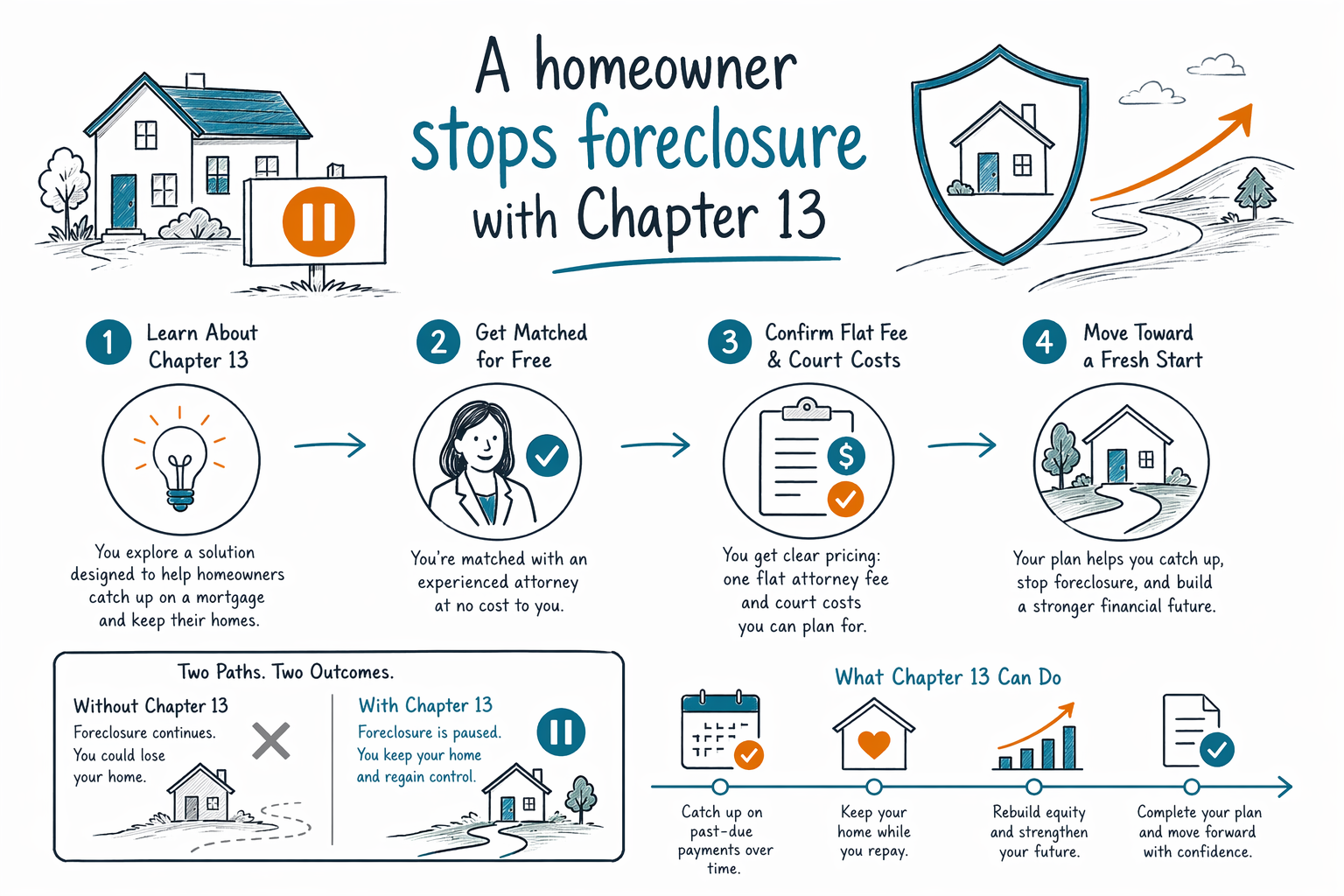
An illustrated story (not a real client): what helped this homeowner get clarity
This is an ANONYMIZED, illustrative story meant to show how the process often works. It is not a promise of results, and it is not legal advice.
In this example, a homeowner had fallen behind on their mortgage after a mix of job changes and unexpected bills. Letters from the lender and a foreclosure notice made everything feel urgent—and scary.
They didn’t want to guess. Instead, they looked for general information about bankruptcy chapters and what people usually discuss in a first consult—especially the difference between Chapter 7 and Chapter 13 and whether Chapter 13 can be used to catch up over time.
Along the way, they also reminded themselves of an important limit: bankruptcy may not erase every type of debt. Which debts are dischargeable depends on the case and the law in that state and federal district.
They learned the basics: Chapter 7 vs. Chapter 13 (why foreclosure sometimes means Chapter 13)
The homeowner’s main goal was to stop the foreclosure and protect their home while getting a structured way to catch up.
In general educational terms, Chapter 7 is often used when someone may not have the steady income needed to repay debts through a plan. Chapter 13 is commonly discussed for people who want a repayment plan—often including ways to address certain missed mortgage payments over time.
Rules and eligibility can vary by state and district, and there can be special requirements for whether a home can be kept. That’s why the homeowner focused on learning enough to ask the right questions—not enough to decide without a lawyer.
They also understood that outcomes are never guaranteed. An attorney would review the specific facts: the mortgage status, the timing of the foreclosure, income, and other debts.
They got matched with a licensed bankruptcy attorney (free for the person)
CleanSlate Match is a FREE multilingual matching service. It does not file bankruptcy, does not provide legal advice, and it does not create an attorney-client relationship.
In this illustrative story, the homeowner used the matching service to connect with a licensed bankruptcy attorney near them. They provided contact information and a general sense of their situation and preferred language—without sharing sensitive account details.
Within the matching process, the goal was simple: help them reach a real, licensed attorney who could explain the options available in their specific area and what to expect next.
If you’re overwhelmed, you don’t have to have everything figured out first. Being honest about what’s happening—like the foreclosure timeline—helps an attorney evaluate the situation.
They confirmed the flat fee and what else would be owed (honestly, before moving forward)
After being matched, the homeowner scheduled a consultation. In many consumer bankruptcy cases, attorneys typically charge a flat fee for the legal work, plus required court costs and a separate credit-counseling fee.
In this example, the homeowner asked directly what the total would be, and whether the attorney’s fee was flat. They were told that final cost depends on the chapter (Chapter 7 or Chapter 13), case complexity, and the judicial district. Ranges are common, but they are not quotes.
Typical fee ranges many people see for consumer bankruptcy representation are roughly:
- Chapter 7: about $1,500–$3,500 for the attorney’s flat fee (plus court filing fees and required credit-counseling fees)
- Chapter 13: about $3,000–$6,000 for the attorney’s flat fee (plus court filing fees and required credit-counseling fees)
Court filing fees and the required counseling fee are added on top. Those amounts can vary by chapter and sometimes by local procedures, so the only way to know the exact total is to confirm with the attorney after reviewing the facts.
In the story, the homeowner felt relieved because they weren’t pushed, pressured, or promised a guaranteed outcome. They were reminded: a licensed attorney can explain options, but no one can promise that bankruptcy will erase every debt or stop every enforcement action in every situation.
They took the next step: preparing for a first filing conversation and the “fresh start” plan
In the homeowner’s meeting, the attorney explained the process in a patient, practical way—what information would be needed, what issues to focus on, and how Chapter 13 can be used to create a repayment plan aimed at catching up.
They also discussed the limits. Many debts usually do not get erased through bankruptcy, including (commonly) student loans, certain recent income taxes, child support/alimony, most court-ordered fines, and debts involving fraud or similar wrongdoing. The attorney clarified that whether any specific debt survives depends on the facts.
The attorney also explained that timing matters. In many situations, when a bankruptcy case is filed, an automatic stay can pause certain collection actions—this may include many foreclosure-related steps and other enforcement such as wage garnishment or lawsuits—though what happens in a particular case can depend on prior filings and other details.
By the end of the consult, the homeowner had a clearer direction: not a miracle, but a structured path forward. They planned next steps with the attorney and moved toward a more stable future, while keeping expectations realistic.
If you’re facing foreclosure now: get matched before you feel trapped
If you’re behind on your mortgage, it’s normal to feel panicked. But you still deserve clear information and a respectful plan.
You can start by learning the basics and then getting matched to a licensed bankruptcy attorney for a local consult. CleanSlate Match can help you take that first step for free.
To explore more stories and general guidance, you can visit case stories and the chapters overview. When you’re ready to talk with an attorney, you can begin with get matched.
No one can guarantee outcomes, but you can control the next step: ask a licensed attorney what Chapter 13 (or other options) could mean for your specific foreclosure timeline, and confirm the flat fee and total expected costs before you commit.
This illustrated example shows how someone behind on a mortgage may learn about Chapter 13, get free attorney matching, confirm the flat fee and court costs, and move toward a fresh start—without any guaranteed outcome.
Common questions
Is this story about a real person?
No. This is an anonymized illustrative story meant to show how the process can go. It is not a specific client’s results and it does not guarantee that Chapter 13 will stop foreclosure in every situation.
Does Chapter 13 always stop a foreclosure?
Not always. In many cases, filing bankruptcy can trigger an automatic stay that pauses many enforcement actions, but whether it applies—and what happens next—depends on timing, the specific facts, and rules that vary by state and federal district.
What does it cost to hire a bankruptcy attorney?
In many consumer bankruptcy cases, attorneys charge a flat fee plus required court filing fees and a small required credit-counseling fee. Typical attorney flat-fee ranges are roughly $1,500–$3,500 for Chapter 7 and $3,000–$6,000 for Chapter 13, but your final costs depend on chapter and case complexity. Ranges are not quotes.
Is CleanSlate Match a law firm?
No. CleanSlate Match is a FREE matching service, not a law firm and not a lawyer. We don’t file bankruptcy and we don’t provide legal advice. A licensed bankruptcy attorney you’re matched with can provide legal guidance after reviewing your situation.
Should I share my Social Security number or bank details to get matched?
No. CleanSlate Match collects contact and general intent only (for example, name, phone, optional email, state, general situation, and preferred language). You should not share Social Security numbers or bank-account details through a matching form.
Related help
How a couple buried in hospital bills used CleanSlate Match to find a Chapter 7 attorney and get a fresh start.
Open → A worker stops wage garnishment in daysHow a single parent halted a garnishment and protected their paycheck after getting matched with a lawyer.
Open → A new arrival gets help in their own languageHow someone new to the US found a bilingual bankruptcy attorney to deal with overwhelming credit-card debt.
Open →