How we've helped
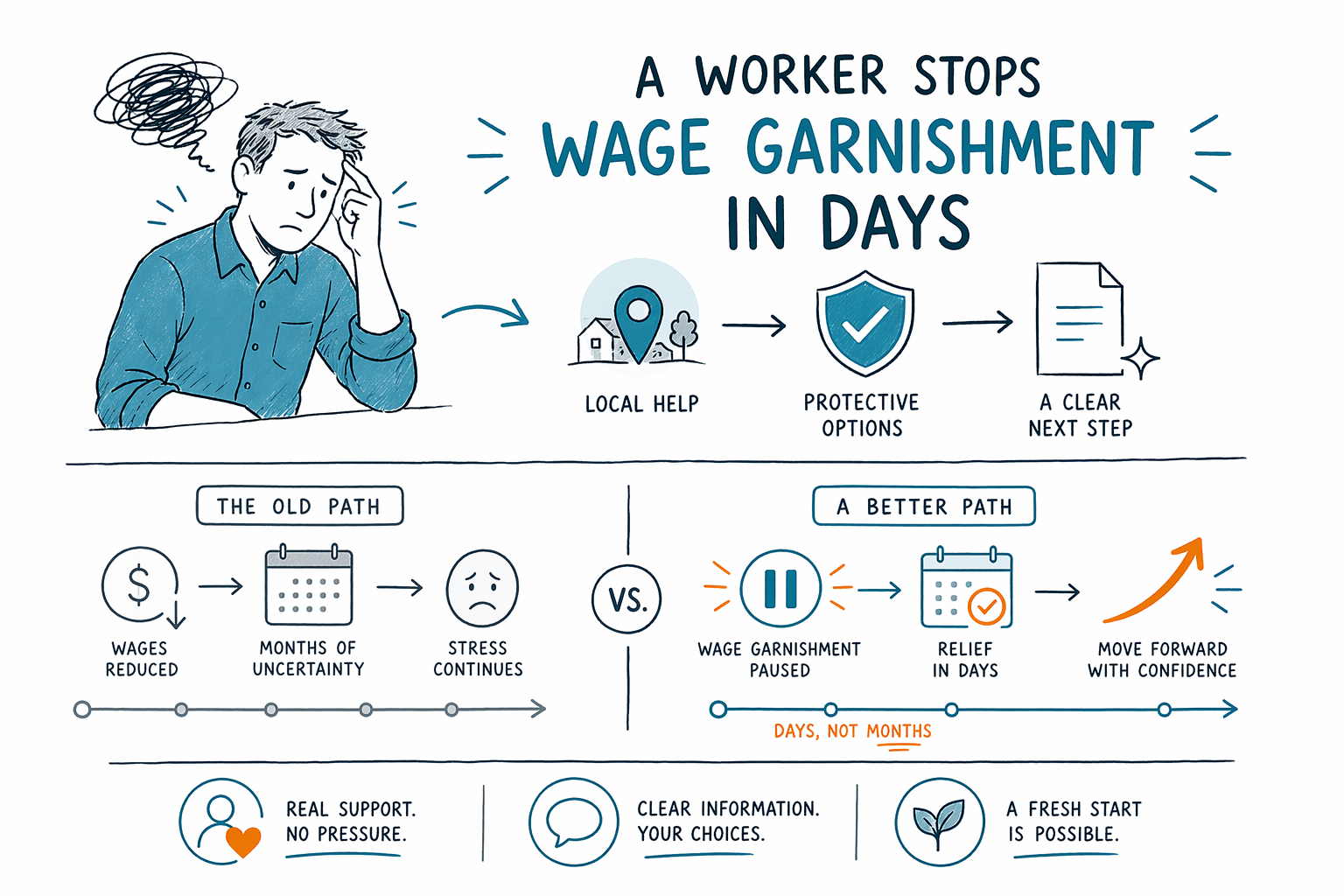
A worker stops wage garnishment in days
This is an anonymized, illustrative story about one worker’s experience. It is not a promise of results, and bankruptcy outcomes depend on the person, the chapter, and the rules in their state.
A paycheck was suddenly smaller
A single parent came to CleanSlate Match feeling stuck and embarrassed. Their wages had been garnished, and each payday was not enough to cover rent, groceries, and child care.
They did what many people do first: they tried to understand whether the debt could be handled without going to court. They were worried about losing more money, but they also wanted a real, lawful way to stop the pressure.
Because CleanSlate Match is a free matching service, not a law firm, the person shared only general information: their state, the kind of debt problem they were facing, and their preferred language. No Social Security number, bank details, or account numbers were needed.
Getting matched with a licensed bankruptcy attorney
CleanSlate Match connected them with a licensed bankruptcy attorney near them. Before anything moved forward, they confirmed the lawyer was licensed in their state and asked basic questions about Chapter 7 and Chapter 13.
That first conversation helped them understand something important: bankruptcy is not one-size-fits-all. Rules for the means test, exemptions, and what property can be protected vary by state and federal district, and a local attorney is the right person to explain the options.
The attorney also explained that filing can trigger the automatic stay, which usually pauses most collection activity, including wage garnishment, lawsuits, and many other creditor actions. It was not a guarantee for every situation, but it gave the worker a clearer path forward.
How they sorted out the next step
The attorney walked through the difference between Chapter 7 and Chapter 13 in plain language. Chapter 7 may help people who qualify under the means test, while Chapter 13 may let someone repay part of what they owe over time through a court-approved plan.
They also talked honestly about what bankruptcy cannot do. Some debts usually survive, including most student loans, recent income taxes, child support and alimony, most court fines, and debts tied to fraud. The worker was relieved to hear the truth instead of a sales pitch.
That clarity helped them decide what information to gather next for a formal review with the attorney. The goal was not a miracle. The goal was to understand the available legal options and choose a realistic one.
Confirming the fee before filing
Before moving ahead, the worker asked about cost. The attorney explained that most consumer bankruptcy lawyers charge a flat fee, plus the court’s filing fee and a small required credit-counseling fee.
The lawyer gave a rough range, not a quote, and explained that the final amount depends on the chapter, the complexity of the case, and the local district. That honest answer helped the person budget and avoid surprises.
They were also reminded that CleanSlate Match is free for the person seeking help. Participating attorneys pay a flat fee to be part of the service, but the person in debt does not pay CleanSlate Match anything.
Moving toward a fresh start
After speaking with the attorney, the worker felt less alone and more organized. They had a plan, a clearer sense of timing, and a better understanding of what documents and steps might come next.
In a real case, the details would depend on the facts, the chapter chosen, and the rules in that state. But the important part of this story is simple: when the person got calm guidance, they could stop guessing and start making decisions.
If you are facing garnishment, foreclosure pressure, or a lawsuit, you can start by getting matched with a licensed bankruptcy attorney near you. The service is free, and you only need to share general contact and situation details to begin: get matched.
This story shows how a stressed worker got calm, local legal guidance and a clear next step toward relief, without promises and without pressure.
Common questions
Can bankruptcy always stop a wage garnishment right away?
Often, filing bankruptcy triggers the automatic stay, which usually pauses wage garnishment and other collection actions. But every case is different, and some debts or court orders may be treated differently depending on state and district rules.
Do I need to send bank statements or account numbers to CleanSlate Match?
No. CleanSlate Match only collects contact information and general intent, such as your state, preferred language, and the kind of debt problem you are facing. A licensed attorney may later ask for documents, but the matching service does not need sensitive financial account details.
Will bankruptcy erase every debt I have?
No. Bankruptcy can help with many debts, but not all of them. Some debts usually remain, such as most student loans, recent income taxes, child support and alimony, most court fines, and debts from fraud.
Related help
How a couple buried in hospital bills used CleanSlate Match to find a Chapter 7 attorney and get a fresh start.
Open → A homeowner stops foreclosure with Chapter 13How someone behind on a mortgage filed Chapter 13 to catch up and keep their home.
Open → A new arrival gets help in their own languageHow someone new to the US found a bilingual bankruptcy attorney to deal with overwhelming credit-card debt.
Open →