Your situation
Bankruptcy After a Divorce
Divorce can leave you with debt, stress, and a lot of questions about what comes next. Bankruptcy may help in some cases, but the right timing and chapter depend on your state, your debts, and your divorce agreement.
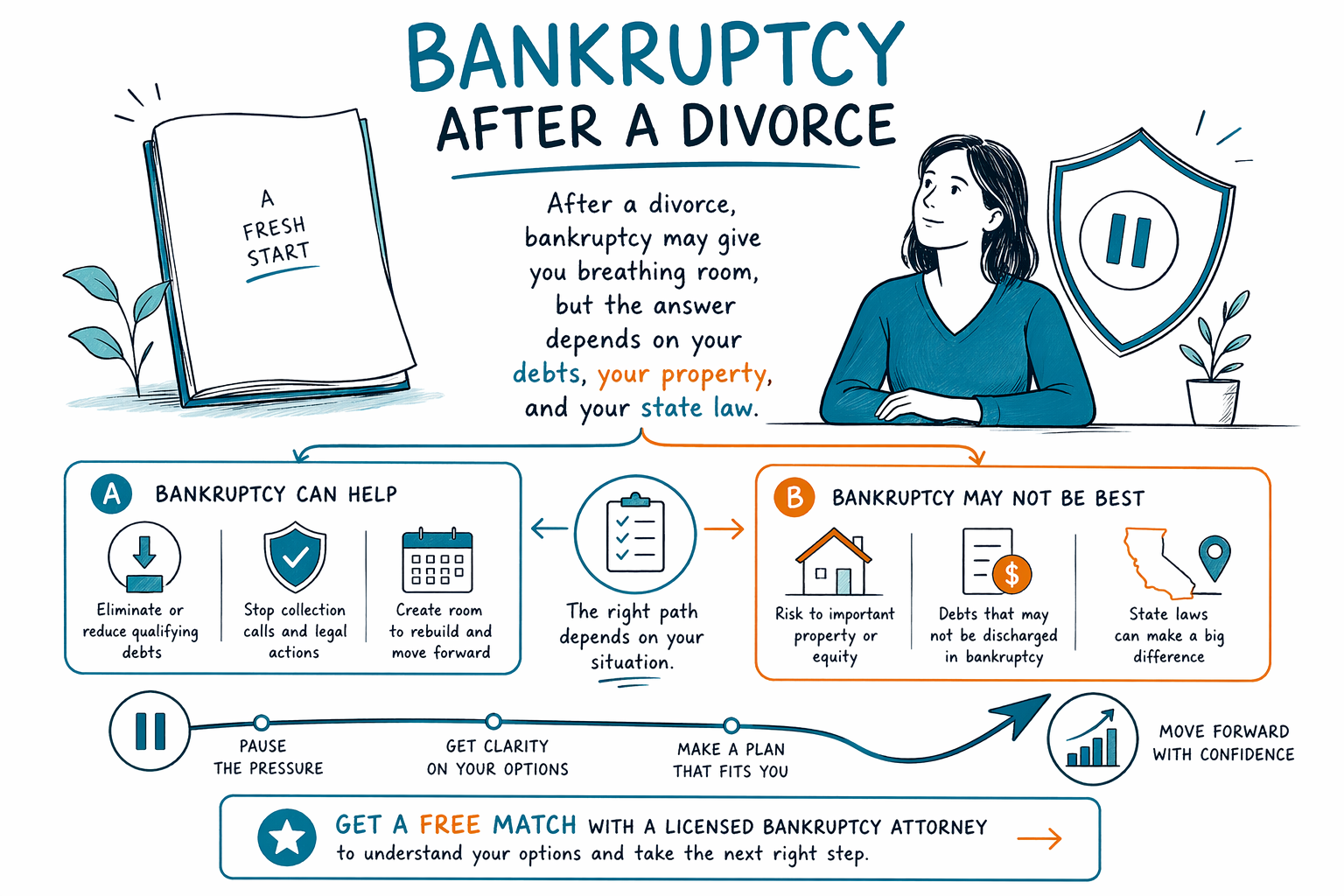
How divorce and debt can overlap
After a divorce, people often discover debts they shared with a former spouse, or debts that were assigned to one person in the divorce decree. That can be confusing, especially if creditors are still calling or a joint account is still open.
Bankruptcy can sometimes help with credit card debt, medical bills, personal loans, and some lawsuits. But it does not automatically erase every debt, and it does not change a divorce order by itself. Divorce rules and bankruptcy rules are both important, and they can affect each other.
If you are dealing with a divorce and heavy debt, it helps to get general guidance early. A licensed bankruptcy attorney in your area can explain how local court rules, exemptions, and timing may affect your options.
What bankruptcy may and may not do after divorce
A bankruptcy filing can often stop most collection activity as soon as the case is filed because of the automatic stay. That can pause many collection calls, lawsuits, wage garnishments, and foreclosure activity, although there are exceptions and some actions may require extra court steps.
Bankruptcy may help discharge many unsecured debts, but some debts usually survive. These often include most student loans, recent income taxes, child support and alimony, most court fines, and debts tied to fraud. Whether a debt is dischargeable depends on the facts of the case and the chapter filed.
In some divorces, one spouse agrees to pay a debt or hold the other harmless. That agreement matters, but it does not always control how a creditor can collect. A bankruptcy attorney can help you understand the difference between your divorce order and your legal responsibility to creditors.
Chapter 7 or Chapter 13 after a divorce
People often ask whether Chapter 7 or Chapter 13 is better after divorce. There is no one answer. Chapter 7 is sometimes used when someone qualifies under the means test and wants a faster path for qualifying debts. Chapter 13 uses a repayment plan over time and may help people catch up on mortgage arrears, car payments, or certain other debts while protecting property.
Your income after divorce matters, but so do household size, state exemptions, property ownership, and which debts are joint or separate. If your income dropped because of the divorce, that can change the analysis, but the outcome still depends on the full picture.
If you are unsure where you fit, start with a free match and ask for a licensed bankruptcy attorney who handles consumer bankruptcy in your state. You can compare your options before you decide what to do.
Timing matters: before, during, or after the divorce
The best time to file is different for different people. Some people file before the divorce is final. Others wait until after the divorce so the property division and support terms are clearer. In some cases, filing during the divorce can create extra issues that need careful review.
This is one reason it helps to speak with a lawyer who understands both divorce-related debt and bankruptcy. The goal is not to rush you. It is to avoid mistakes that could cost you time, money, or property.
If you are already behind on bills, do not wait until a lawsuit or garnishment gets worse before asking for help. You can still get general guidance and decide what to do next.
What to do right now
- Gather the basics: a list of debts, any divorce papers, and any letters or lawsuits you received.
- Keep paying for food, housing, utilities, and anything needed to protect your safety and basic stability.
- Do not sign away rights or ignore court papers without getting legal guidance.
- Avoid giving a creditor sensitive financial information you do not understand or need to share.
- Get matched with a licensed bankruptcy attorney near you who can review your situation and explain your options.
CleanSlate Match is a FREE matching service. We do not file bankruptcy, we are not a law firm, and using this site does not create an attorney-client relationship.
How CleanSlate Match can help
You only need to share contact information and general intent, like your state, your preferred language, and a short description of what is going on. We do not ask for Social Security numbers, bank account numbers, credit card numbers, or detailed financial records.
We can help connect you with a licensed bankruptcy attorney near you who can confirm whether they handle Chapter 7, Chapter 13, and divorce-related debt issues in your area. Because bankruptcy law and exemptions vary by state and district, it is important to confirm the attorney’s active bar license before you move forward.
Most consumer bankruptcy attorneys charge a flat fee, plus the court filing fee and a small required credit-counseling fee. The amount depends on the chapter, complexity, and district, so any range is only a general estimate, not a quote.
After a divorce, bankruptcy may give you breathing room, but the answer depends on your debts, your property, and your state law—get a free match with a licensed bankruptcy attorney to understand your options.
Common questions
Will bankruptcy erase all debt from my divorce?
Not always. Bankruptcy may discharge many unsecured debts, but some debts usually remain, and divorce-related obligations can be complicated. A licensed bankruptcy attorney can tell you which debts may be affected in your situation.
Can I file before my divorce is final?
Sometimes, but timing can matter a lot. Filing before, during, or after divorce can lead to different results, so it is worth getting local legal guidance before you choose.
Do I need to share my ex-spouse’s financial information?
Not necessarily for a first review. CleanSlate Match only collects contact and general intent, and a lawyer can tell you what documents are actually needed for your case.
What if my ex said they would pay a joint debt?
That may matter in the divorce case, but creditors may still be able to look to you if your name is on the account. A bankruptcy attorney can explain how that works where you live.
Related help
How the automatic stay and Chapter 13 can pause foreclosure and help you keep your home.
Open → Bankruptcy When Your Wages Are Being GarnishedHow filing can stop a garnishment quickly and protect your paycheck.
Open → Bankruptcy When You're Buried in Medical DebtHow bankruptcy treats medical bills and why it's one of the most common reasons people file.
Open →