Guides
Will bankruptcy ruin my credit?
Bankruptcy can hurt your credit score for a while, but it doesn’t “ruin” you forever. With the right plan, many people rebuild after bankruptcy and stop collection pressure sooner.
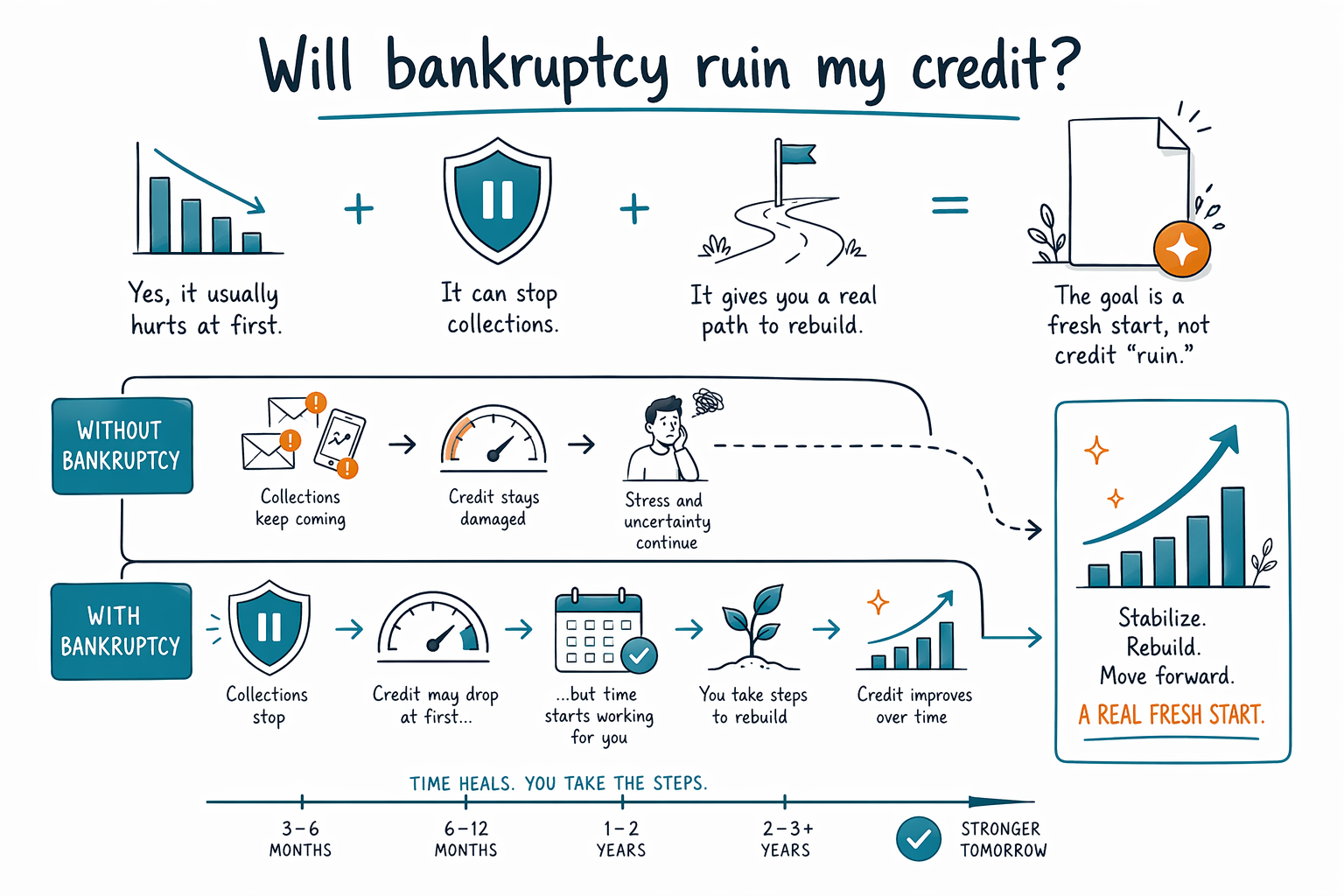
The direct answer: will bankruptcy ruin your credit?
Bankruptcy will usually make your credit look worse at first, because it becomes a public record and will be reported to credit bureaus. But it often gives people a chance to pause legal pressure and rebuild instead of staying stuck in ongoing collections.
Whether it improves your overall situation usually depends on what’s already happening—missed payments, collections, lawsuits, and garnishment can damage credit too. Bankruptcy is often considered when those problems have grown too big to manage.
The details depend on your case and your state and bankruptcy district. A licensed bankruptcy attorney near you can explain how your particular facts may affect your credit and options. CleanSlate Match can help you get matched for free to an attorney—no pressure.
What changes on your credit report—and for how long?
In general, both Chapter 7 and Chapter 13 are reported on your credit report and can stay there for years. The biggest credit impact often comes from the filing itself and from the fact that you may have had missed payments before filing.
The duration and how your score moves can vary based on things like your prior payment history, other debts, and how credit bureaus update reports. That’s why exact timelines are not guaranteed.
What is consistent: bankruptcy can reduce or stop many collection actions, and that can help you stabilize your finances while rebuilding credit in a more controlled way.
Chapter 7 vs Chapter 13: how credit impact often differs
Chapter 7 is typically a quicker process. It may still show on your credit report for a long time, but it’s often designed to discharge eligible unsecured debts (meaning the court may relieve you of responsibility for certain debts that qualify).
Chapter 13 usually involves a repayment plan over time. While the filing can still affect your credit, some people focus on the steady, court-approved payments as a way to rebuild and catch up on certain debts. Many people also use Chapter 13 to address issues like mortgage arrears.
Which chapter is better for your credit and goals depends on your income, your debts, and whether you can meet plan requirements. Bankruptcy law and the means test can be complex, and rules vary by state and district.
Will bankruptcy stop collections and lawsuits while my credit recovers?
One of the biggest practical benefits is the “automatic stay.” In many cases, once a bankruptcy case is filed, the automatic stay can pause many collection actions, including certain lawsuits, wage garnishments, and foreclosure activity.
This doesn’t fix your credit instantly, but it can stop the bleeding—giving you time to deal with the case through the court process rather than handling calls, threats, and court dates alone.
Important: the automatic stay has exceptions and limits. Your attorney can explain what it means in your specific situation, including any debts that may be treated differently.
What bankruptcy usually cannot erase (and how that affects your “fresh start”)
Bankruptcy is not a guaranteed wipe-out for every debt. Many types of obligations often survive bankruptcy or are only partially relieved, including most student loans, recent income taxes, child support and alimony, many court fines, and debts connected to fraud or certain misconduct.
This matters for your credit because remaining debts can continue to be reported, and collection activity may continue for debts that aren’t dischargeable.
A licensed bankruptcy attorney can review which debts may be dischargeable in your area and explain realistic outcomes. If you want help starting that conversation, get-matched with a licensed bankruptcy attorney for free through CleanSlate Match.
Cost basics: what bankruptcy may cost (and what drives the range)
Most consumer bankruptcy attorneys charge a flat fee, plus the court’s filing fee and a small required credit-counseling fee. The exact total varies by the chapter (Chapter 7 vs Chapter 13), how complex your case is, and the bankruptcy district.
As a general guide, many people pay a flat attorney-fee range that can be in the few-thousand-dollar area, with court filing fees and required counseling fees on top. The total cost can be higher when there are multiple issues—like secured debts, arrears, prior filings, unusual income questions, or defending objections.
Because ranges are not quotes and results are not guaranteed, it’s best to confirm pricing directly with the attorney you’re matched to. CleanSlate Match is free to you and does not file bankruptcy or represent you.
Bankruptcy usually hurts your credit at first, but it can stop collections and give you a real path to stabilize and rebuild—so the goal is a fresh start, not credit “ruin.”
Common questions
If I file bankruptcy, can I still get a credit card or apartment after?
You may have more difficulty at first, because bankruptcy can affect your credit profile and lenders’ policies. But many people rebuild over time, and housing sometimes depends on your rental screening rules. An attorney can also explain practical steps that may help you rebuild after filing.
Will my secured debts (like a car loan or mortgage) be erased too?
Sometimes secured debts can be discharged, but often the key issue is whether you keep paying them or catch up through the plan. In Chapter 13, people commonly use the plan to address past-due amounts. The outcome depends on the type of debt, state law, and your facts.
Do Chapter 7 and Chapter 13 affect credit differently?
Yes, in practical ways. Both can impact credit for years, but Chapter 13 typically involves making court-approved payments over time, which may help with stability and rebuilding. The best choice depends on your income, eligibility, and goals—something an attorney can explain for your situation.
Does the automatic stay protect me immediately after I file?
In many cases, yes—the automatic stay goes into effect when the bankruptcy case is filed and can pause certain collection actions. However, there are exceptions and edge cases, so it’s important to confirm what it means for your specific debts and any prior filings.
Can bankruptcy remove every debt so my credit improves faster?
Not always. Some debts usually survive bankruptcy, such as many student loans, certain taxes, child support/alimony, and debts involving fraud or certain fines. How much improves your overall credit depends on which debts remain and how your future payments go.
Related help
A plain-language comparison of the two main consumer bankruptcies, when each makes sense, and how a lawyer helps you decide.
Open → What Debt Bankruptcy Can and Can't EraseWhich debts bankruptcy wipes out, which ones survive (like most student loans and child support), and why it matters.
Open → Will I Lose My House or Car in Bankruptcy?How exemptions and the two chapters affect your home and car — and why many people keep both.
Open →