Guides
Medical Debt and Bankruptcy
Medical debt is one of the most common reasons people look at bankruptcy, and you are not alone. In many cases, bankruptcy can help reduce or discharge medical bills, but the result depends on your chapter, your state, and the rest of your financial picture.
Can bankruptcy help with medical bills?
Often, yes. Medical bills are usually unsecured debt, which means they may be treated like credit card debt in bankruptcy. Depending on the chapter and your case, some or all of those bills may be discharged, but there is no guarantee.
The important part is to look at the whole picture. Bankruptcy rules vary by state and federal district, and exemptions, income rules, and filing choices can change the outcome. A licensed bankruptcy attorney in your area can explain how the law applies where you live.
If you are behind on other bills too — like credit cards, a lawsuit, rent, or a mortgage — medical debt may be part of a bigger solution. CleanSlate Match is a free matching service that can connect you with a licensed bankruptcy attorney near you for general guidance.
What bankruptcy can and cannot do with medical debt
Bankruptcy can often stop collection calls, lawsuits, and other collection activity once the case is filed. In many cases, the automatic stay also pauses wage garnishment and foreclosure activity, though the details depend on the case and the type of debt.
Bankruptcy does not erase every debt. Some debts usually survive, including most student loans, recent income taxes, child support and alimony, most court fines, and debts involving fraud. If a medical bill is tied to something unusual, or if a provider has a claim against property or a lawsuit is already in progress, the result can be different.
It also matters whether you file Chapter 7 or Chapter 13. Chapter 7 may discharge qualifying unsecured debts more quickly if you qualify under the means test. Chapter 13 usually sets up a repayment plan over time and can help people catch up on protected debts while handling medical bills along with other unsecured debt.
Chapter 7 and Chapter 13 in simple terms
Chapter 7 is often used by people whose income is limited and who qualify under the means test. It may discharge many unsecured debts, including medical bills, but you may need to protect property with exemptions. State and district rules matter here.
Chapter 13 is often used when someone needs time to catch up on mortgage arrears, car payments, or other debts while making one court-approved monthly plan payment. Medical bills are usually treated as unsecured debts in the plan and may be paid only in part, but the exact result depends on your income, property, and local rules.
Neither chapter is “better” for everyone. The right choice depends on your income, assets, household size, recent financial history, and what you are trying to protect. A lawyer can help you compare the options without pressure.
If you are getting collection calls, lawsuits, or garnishment
Medical debt can become urgent fast. If a collector is calling, a lawsuit has started, or your paycheck is being garnished, it is reasonable to get legal help quickly.
- Gather basic information about the debt, the lawsuit, or the garnishment notice.
- Do not send SSNs, bank numbers, credit card numbers, or full account details to a matching service.
- Ask for a consultation with a licensed bankruptcy attorney in your state.
- Confirm the attorney is licensed and in good standing with the state bar.
CleanSlate Match only collects contact information and general intent, such as your name, phone number, optional email, state, preferred language, and a brief description of the situation. It is free for you to use.
What the costs usually look like
Most consumer bankruptcy attorneys charge a flat fee, plus the court’s filing fee and a small required credit-counseling fee. The exact total depends on the chapter, the complexity of the case, and your local district, so any range is only a general estimate — not a quote.
In a simpler Chapter 7 case, total out-of-pocket costs are often lower than in Chapter 13. Chapter 13 usually has a more involved process and may cost more overall, but the attorney can explain whether fees are paid before filing, through the plan, or in another local practice allowed by the court.
If money is tight, ask the attorney’s office how they handle fees and whether they offer a payment plan. CleanSlate Match itself is free to the person in debt.
A calm next step
Medical debt can feel embarrassing, but it is a common reason people seek bankruptcy help, and it does not mean you failed. What matters now is getting clear information for your state and your situation.
Start with a free match to a licensed bankruptcy attorney near you through Get matched. If you want to learn more first, you can also browse our guides or read about the differences between Chapter 7 and Chapter 13.
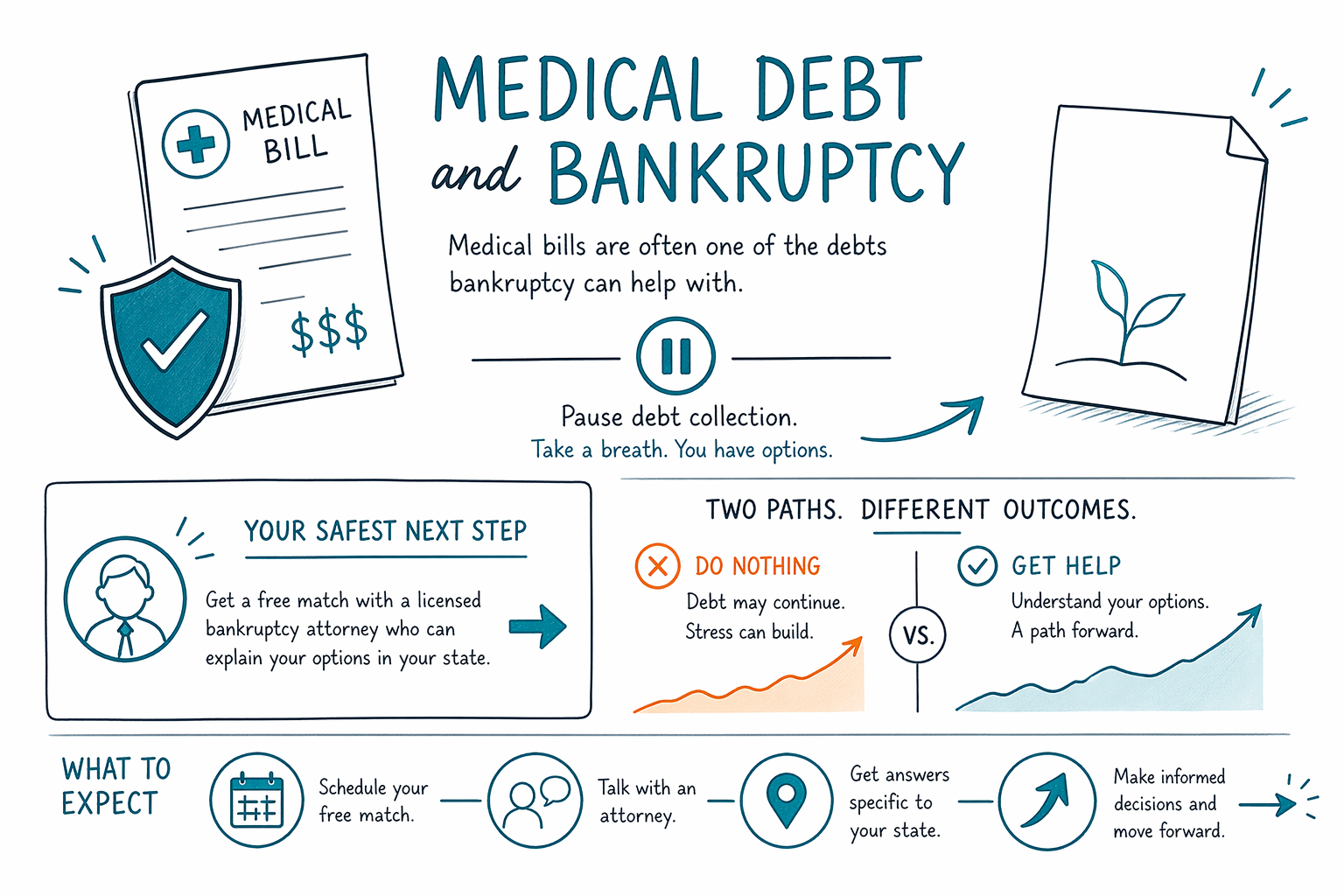
Medical bills are often one of the debts bankruptcy can help with, and the safest next step is a free match with a licensed bankruptcy attorney who can explain your options in your state.
Common questions
Will bankruptcy erase my medical bills completely?
It may, but not always. Medical bills are often dischargeable, especially in Chapter 7, but outcomes depend on your income, assets, chapter choice, and state or district rules.
Can bankruptcy stop a hospital or collector from suing me?
Usually, once a bankruptcy case is filed, the automatic stay pauses most collection activity and lawsuits. There are exceptions, so a lawyer should review the notice and your local rules.
Do I need to give CleanSlate Match my account numbers or Social Security number?
No. We only collect contact information and general intent. Do not send account numbers, bank details, or other sensitive financial information to a matching service.
What debts usually do not go away in bankruptcy?
Some common debts that often survive include most student loans, recent income taxes, child support and alimony, most court fines, and debts from fraud. A licensed attorney can explain how this applies in your case.
Related help
A plain-language comparison of the two main consumer bankruptcies, when each makes sense, and how a lawyer helps you decide.
Open → What Debt Bankruptcy Can and Can't EraseWhich debts bankruptcy wipes out, which ones survive (like most student loans and child support), and why it matters.
Open → Will I Lose My House or Car in Bankruptcy?How exemptions and the two chapters affect your home and car — and why many people keep both.
Open →