Guides
Alternatives to Bankruptcy
Yes, there are alternatives to bankruptcy. Some help in the right situation, but they also have real limits, costs, and risks — so it helps to compare them carefully before you decide.
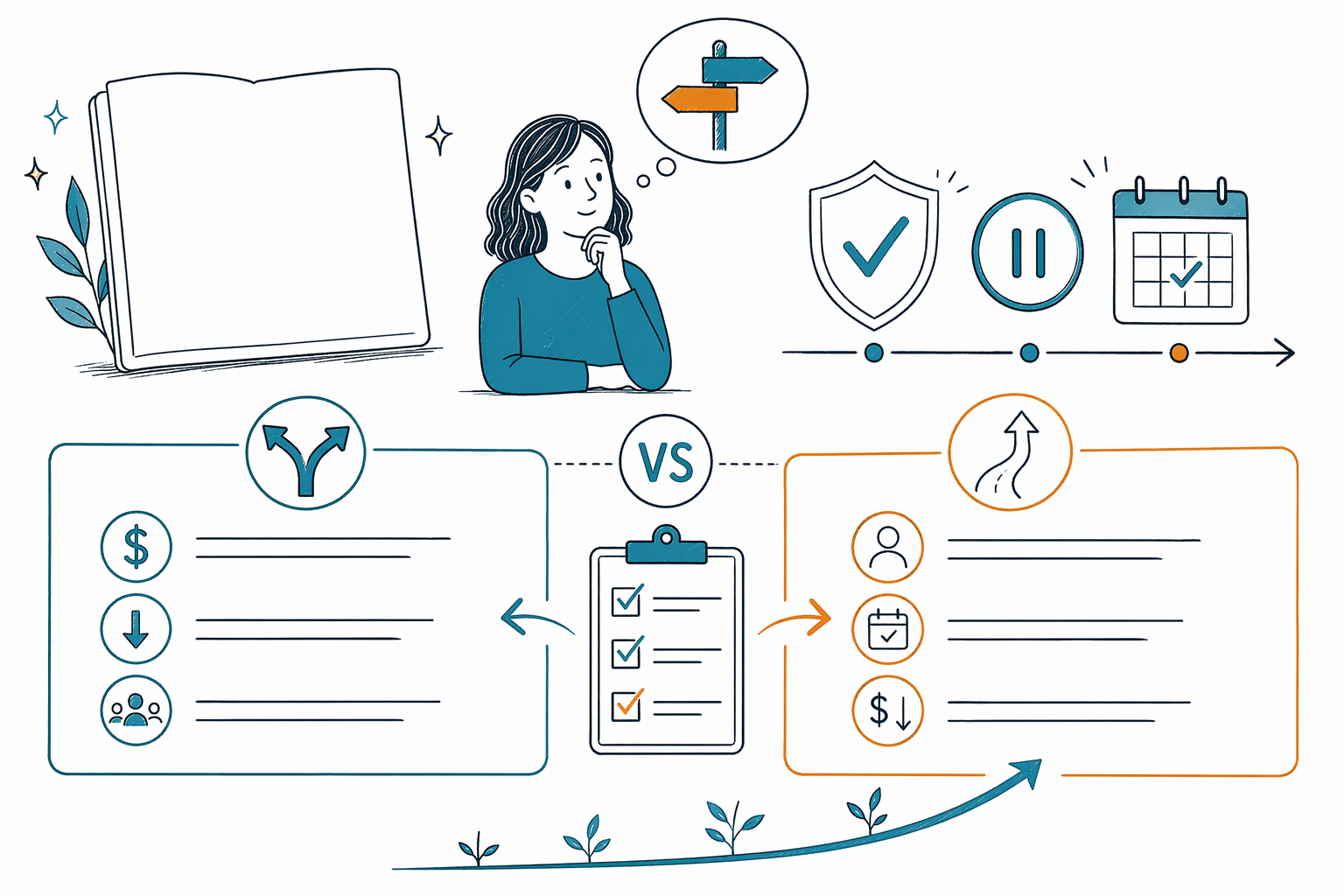
The short answer: sometimes an alternative works, sometimes bankruptcy is the safer reset
Alternatives to bankruptcy can make sense if your debt is manageable, your income is steady, and you mainly need lower payments, more time, or help organizing bills. Common options include credit counseling, a debt management plan, debt consolidation, negotiating directly with creditors, or debt settlement.
But these options do not always stop lawsuits, wage garnishment, repossession, or foreclosure. They also do not create the same broad legal protection that bankruptcy can. In a bankruptcy case, the automatic stay usually stops most collection activity as soon as the case is filed.
It is also important to be honest about what bankruptcy can and cannot do. Bankruptcy may help with many unsecured debts, but some debts usually survive, including most student loans, recent income taxes, child support, alimony, most court fines, and debts tied to fraud. Outcomes depend on the facts of the case.
Because bankruptcy rules, exemptions, and local practice vary by state and federal judicial district, this page is only general educational information — not legal, tax, or financial advice. A licensed bankruptcy attorney in your area can tell you what options fit your situation.
Common alternatives to bankruptcy and their trade-offs
Credit counseling can help you understand your budget, debts, and options. In some cases, a counselor may suggest a debt management plan, sometimes called a DMP. Under a DMP, you usually make one monthly payment to the agency, and the agency sends payments to participating creditors. This may help with credit card debt, especially if interest rates are reduced. But it usually does not reduce secured debts like a mortgage or car loan, and not every creditor has to participate.
Debt consolidation means replacing several debts with one new loan or one new payment. This can be helpful if the new loan truly lowers your interest rate or monthly payment and you can keep up with it. The risk is that some people end up with a new loan and still run up old accounts again. If the new loan is secured by your home or other property, the stakes can be even higher.
Direct negotiation or debt settlement means trying to get a creditor to accept less than the full amount owed. Sometimes this works, but it can take time, creditors do not have to agree, collection activity may continue, and forgiven debt can have tax consequences in some situations. Missed payments during settlement efforts can also hurt credit and increase the chance of lawsuits.
If you are behind on a mortgage, facing foreclosure, or dealing with wage garnishment, alternatives may not move fast enough. In those situations, it is especially important to learn how bankruptcy works too. You can read more in our guides and compare the basics of chapters.
When an alternative may be worth trying
An alternative may be worth a serious look if your income is stable, you can cover basic living costs, and your total debt is something you can realistically repay over time. It may also make sense if most of your problem is high-interest credit card debt rather than lawsuits, tax debt, child support arrears, or a foreclosure deadline.
These options can also be useful if you want to avoid filing a court case and your creditors are still willing to work with you. Some people simply need structure, a realistic payment plan, and help communicating with creditors.
Still, honesty matters here. If your budget is already short every month, a repayment-based alternative may only delay the problem. If collectors are suing you, garnishing wages, or moving toward foreclosure, waiting too long can make the situation harder to fix.
A good question is not just, "Can I make this payment next month?" It is, "Can I keep making it for the full plan without falling behind on rent, food, utilities, child care, or transportation?"
When bankruptcy may be the more practical option
Bankruptcy is often worth discussing if you have little or no realistic path to repay your debts, even with reduced interest or a longer schedule. It may also be the better tool if you need legal protection quickly — for example, to stop most collection calls, wage garnishment, lawsuits, repossession efforts, or a foreclosure sale.
Chapter 7 and Chapter 13 are the two main consumer bankruptcy chapters. Chapter 7 may erase some unsecured debts for people who qualify, often after a means test review. Chapter 13 is a repayment plan over time and may help people catch up on a mortgage or car loan while keeping property they want to keep. Many people are able to keep their home or car through exemptions or through a Chapter 13 plan, but the details depend on state law, the type of property, and the facts of the case.
Bankruptcy is not a magic eraser. Some debts usually survive, including most student loans, recent income taxes, child support, alimony, most court fines, and debts from fraud. And even debts that can sometimes be discharged depend on proper filing, local rules, and the individual facts.
That is why a comparison with a licensed bankruptcy attorney can be so helpful. A lawyer can explain not only whether bankruptcy is possible, but whether it is actually better than a settlement or repayment approach in your state and district.
What these options may cost
Costs vary a lot, and no honest person should promise a price without learning more about your case. Debt management plans, consolidation loans, and settlement efforts all have their own fee structures and risks. Make sure you understand every monthly fee, setup fee, late fee, interest rate, and how long the plan is expected to last before you agree to anything.
If you are comparing those costs to bankruptcy, it helps to know that many consumer bankruptcy attorneys charge a flat fee rather than billing by the hour. In many places, a Chapter 7 attorney flat fee often falls somewhere around $1,000 to $2,500, and a Chapter 13 attorney flat fee is often roughly $3,000 to $6,000 or more, depending on the district, the complexity of the case, and local practice. These are general ranges, not quotes.
On top of the attorney fee, there is also the court filing fee and a small required credit-counseling/education cost. In many cases, the filing fee is a few hundred dollars, and the required courses are usually modest in price. The real total depends on the chapter you file, where you live, and whether your case involves issues like business debt, nonexempt property, prior filings, lawsuits, or contested matters.
CleanSlate Match is a free matching service, not a law firm and not your lawyer. We do not file bankruptcy cases. We help connect people with a licensed bankruptcy attorney near them so they can get real case-specific advice and ask about fees directly.
How to compare your options without making things worse
If you are overwhelmed, try to slow the process down just enough to compare choices clearly. You do not need to know every legal term before you ask for help.
- List the debts that are causing the most pressure first: lawsuit, garnishment, foreclosure, car repossession, utilities, rent, or credit cards.
- Look at your real monthly budget, including food, housing, medicine, child care, and transportation.
- Ask whether the option you are considering stops collection action or only asks creditors to cooperate.
- Ask how long the plan lasts and what happens if you miss a payment.
- Ask which debts are included and which are not.
- Ask about total cost, not just the first monthly payment.
- If you speak another language more comfortably, ask for language help or an interpreter.
Before hiring any attorney, confirm that the lawyer is licensed in your state and in good standing with the state bar. If you want to explore bankruptcy alongside other options, you can get matched for free with a licensed bankruptcy attorney near you.
CleanSlate Match only collects contact information and general intent, such as your name, phone, optional email, state, preferred language, and a general sense of what is going on. We do not ask for a Social Security number, bank account numbers, credit card numbers, or detailed account balances to make a match.
Alternatives to bankruptcy can help in some cases, but if debt is crushing you or collections are moving fast, it is wise to compare them with bankruptcy before you choose.
Common questions
Is debt settlement better than bankruptcy?
Sometimes, but not always. Settlement can work for some unsecured debts, but creditors do not have to agree, collections may continue, and lawsuits can still happen. Bankruptcy may offer stronger legal protection, especially if you are facing garnishment, foreclosure, or multiple collectors.
Will bankruptcy erase all my debt?
No. Some debts usually survive, including most student loans, recent income taxes, child support, alimony, most court fines, and debts from fraud. What happens depends on the type of debt and the facts of your case.
Can I keep my home or car if I file bankruptcy?
Many people do, through exemptions or through a Chapter 13 repayment plan. But the answer depends on your state's exemption laws, how far behind you are, the value of the property, and other case details.
Does bankruptcy stop wage garnishment or foreclosure?
When a bankruptcy case is filed, the automatic stay usually stops most collection actions right away, including many garnishments, lawsuits, and foreclosure activity. There are exceptions, and timing matters, so speak with a licensed bankruptcy attorney quickly if there is an urgent deadline.
How much does it cost to talk to CleanSlate Match?
CleanSlate Match is free for the person seeking help. We are a free matching service, not a law firm, and we connect you with a licensed bankruptcy attorney who can explain your options and their fees.
What information do I need to give to get matched?
Only basic contact information and general intent, such as your name, phone, optional email, state, preferred language, and a simple description of the problem. We do not ask for your Social Security number or bank or credit card account numbers.
Related help
A plain-language comparison of the two main consumer bankruptcies, when each makes sense, and how a lawyer helps you decide.
Open → What Debt Bankruptcy Can and Can't EraseWhich debts bankruptcy wipes out, which ones survive (like most student loans and child support), and why it matters.
Open → Will I Lose My House or Car in Bankruptcy?How exemptions and the two chapters affect your home and car — and why many people keep both.
Open →