Guides
What is a debt relief scam?
A debt relief scam is any offer that uses pressure, false promises, or hidden fees to take money from people who are already overwhelmed by debt. If something sounds too easy, guarantees a result, or asks for payment before giving clear written terms, pause and check it carefully.
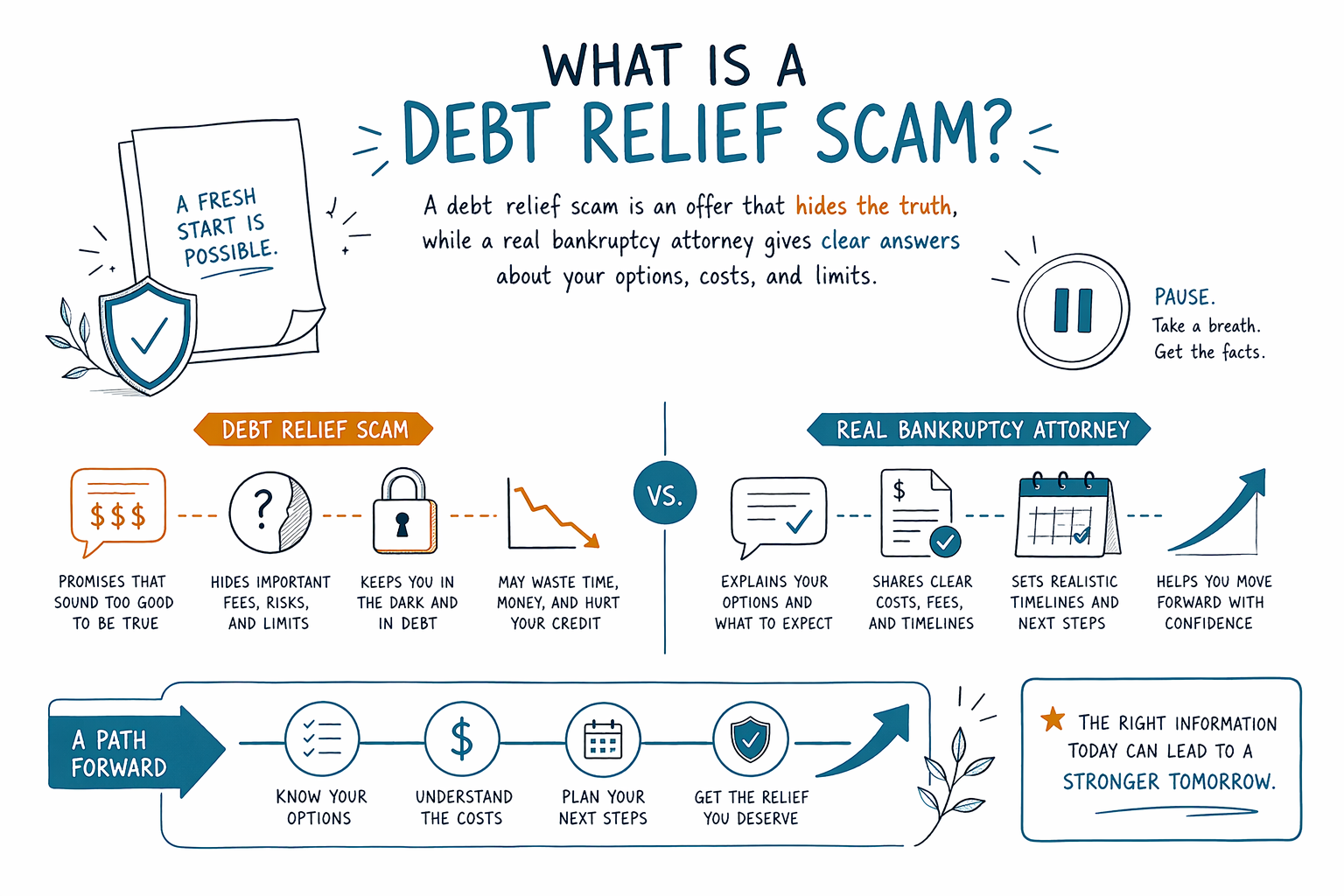
What a debt relief scam usually looks like
A scam may promise to erase your debt fast, stop collection calls immediately, or fix your credit with no real process. It may also ask for money up front, rush you to sign, or avoid giving a written explanation of exactly what they will do.
Some dishonest companies use names that sound legal or official, but they are not a law firm and may not be allowed to give legal advice. Others may say they can negotiate with creditors or the court, but then disappear once they have your fee.
A simple rule: if a company will not clearly explain the service, the total cost, the risks, and what happens if it does not work, treat that as a warning sign.
Common warning signs
Watch for promises that sound absolute, like "guaranteed debt elimination," "we can stop all lawsuits," or "you will never have to pay your creditors again." Real debt solutions depend on your facts, your state, your court district, and the type of debt.
Be careful if they ask you to stop reading letters, stop opening mail, or avoid talking to your creditors without explaining why. Also be cautious if they want sensitive information that should not be collected, like your Social Security number, bank logins, or full account numbers just to give a basic quote.
If they pressure you to act today, demand a large fee before any clear service is provided, or refuse to tell you whether they are a lawyer, a law firm, or just a marketing company, slow down.
How this is different from real bankruptcy help
Bankruptcy is a legal process handled through the court, and it can be a real option for some people facing debt, garnishment, foreclosure, or lawsuits. But it is not magic, and it does not erase every debt.
Some debts usually survive bankruptcy, including most student loans, recent income taxes, child support and alimony, most court fines, and debts from fraud. Whether a debt is discharged depends on the chapter, your facts, and the law where you file.
A licensed bankruptcy attorney can explain whether Chapter 7 or Chapter 13 may fit your situation, what the means test means in your state and district, and what property you may be able to keep through exemptions or a repayment plan. Rules vary by state and judicial district, so the right answer for one person may not fit another.
How to protect yourself before you pay anyone
Take a slow, basic checklist approach before sending money or sharing personal details.
- Ask whether the person or company is a licensed attorney or a law firm.
- Ask for the lawyer's full name and bar number, then confirm the license with your state bar.
- Ask for the total fee in writing and what it includes.
- Ask what debt types they cannot help with and what may survive bankruptcy.
- Do not give bank or card numbers, Social Security numbers, or full account details unless you are sure you are dealing with a real professional and the information is truly needed.
A legitimate professional should answer clearly, calmly, and in plain language.
What bankruptcy can and cannot do
For many people, bankruptcy can bring relief by pausing most collection activity when the case is filed through the automatic stay. That pause can also affect many wage garnishments, lawsuits, and foreclosure actions, though the details depend on the case and local law.
Many people can keep a home or car, especially in Chapter 13 or when exemptions apply, but that is not automatic. The outcome depends on your equity, your payments, your district, and other facts your attorney reviews.
CleanSlate Match is a free matching service, not a law firm and not your lawyer. We help collect contact details and general intent only — like your name, phone, optional email, state, and preferred language — so you can be connected with a licensed bankruptcy attorney near you.
A safer next step
If you are feeling scared or embarrassed, you are not alone. A careful first consultation can help you compare debt relief options honestly, including bankruptcy, without pressure.
You can learn more in our bankruptcy guides or Chapter 7 and Chapter 13 overview, then use Get matched to connect with a licensed bankruptcy attorney near you for free. It is worth confirming the attorney's bar license and asking clear questions before you sign anything.
A debt relief scam is an offer that hides the truth, while a real bankruptcy attorney gives clear answers about your options, costs, and limits.
Common questions
Is every debt relief company a scam?
No. Some companies offer real services, but others use misleading claims or hidden fees. The key is to verify who they are, what they can legally do, and whether they are a licensed attorney or a law firm.
How do I know if bankruptcy is better than a debt relief offer?
It depends on your debts, income, property, and location. A licensed bankruptcy attorney can explain Chapter 7, Chapter 13, the means test, and what may be discharged or survive in your state and district.
Will bankruptcy erase all my debt?
No. Bankruptcy can help with many debts, but some usually survive, such as most student loans, recent taxes, child support and alimony, most court fines, and fraud-related debts. Outcomes depend on the case.
What should CleanSlate Match ask me for?
Only basic contact details and general intent, such as your name, phone, optional email, state, and preferred language. It should not ask for your Social Security number, bank information, or full account numbers.
Related help
A plain-language comparison of the two main consumer bankruptcies, when each makes sense, and how a lawyer helps you decide.
Open → What Debt Bankruptcy Can and Can't EraseWhich debts bankruptcy wipes out, which ones survive (like most student loans and child support), and why it matters.
Open → Will I Lose My House or Car in Bankruptcy?How exemptions and the two chapters affect your home and car — and why many people keep both.
Open →