Free guides
Questions to Ask a Bankruptcy Attorney
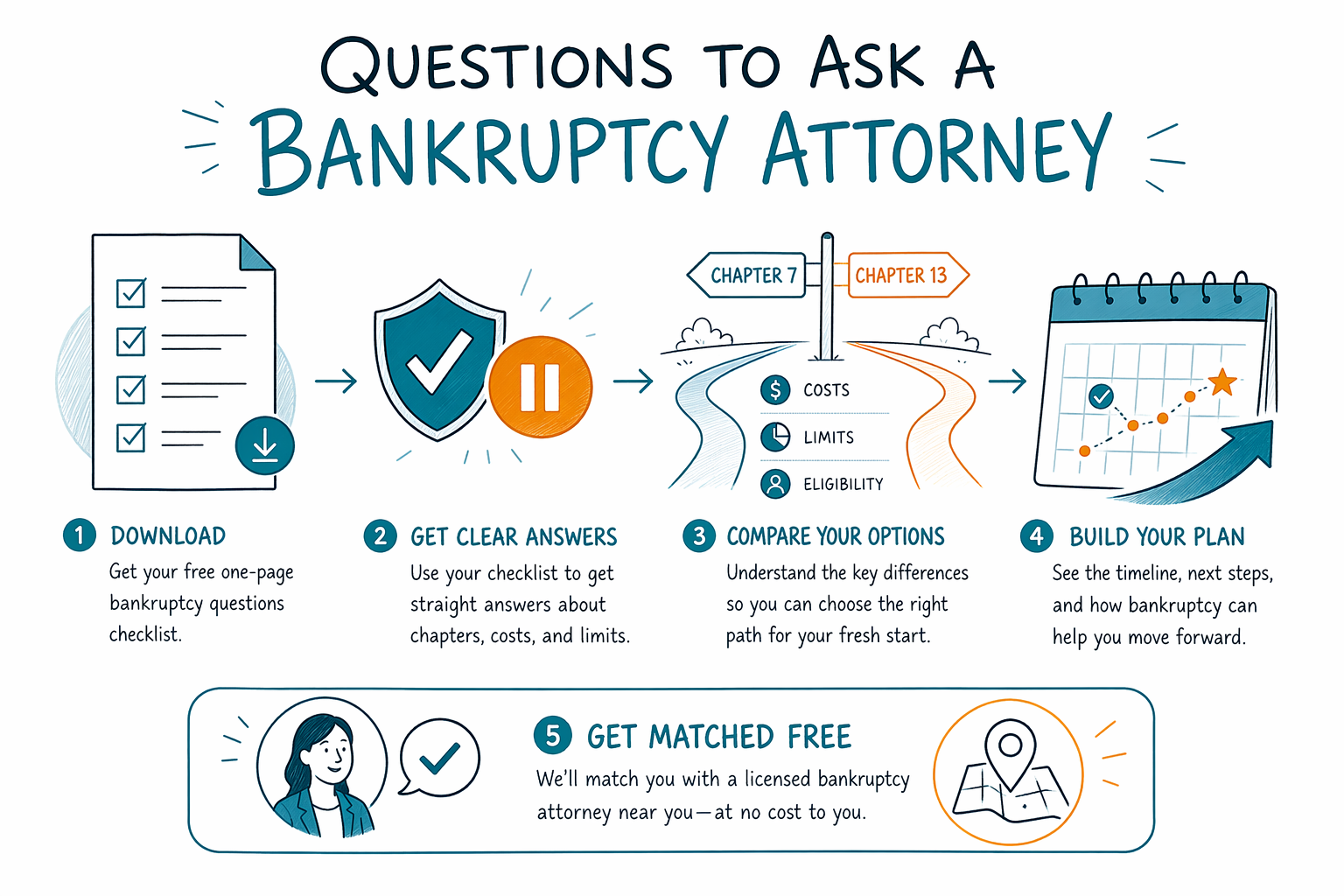
If you’re overwhelmed by debt, the right questions can help you feel calm and in control. Download this free one-page checklist before you meet a licensed bankruptcy attorney.
What’s in the Free PDF (and why it helps)
This free one-page PDF is a simple checklist of questions to ask a bankruptcy attorney during your first consultation. It’s meant to help you understand your options—without pressure—and to make sure you get clear, honest answers.
You’ll find prompts for Chapter 7 vs. Chapter 13, what the “means test” generally means, how exemptions can affect keeping a home or car, and how stopping collections can work once a case is filed.
You’ll also see practical questions about cost and process, including how flat attorney fees typically work, what court fees usually add, and what can make cases more complex.
Who this checklist is for
This resource is for people across the United States who are considering consumer bankruptcy—especially if you feel overwhelmed, scared, behind on bills, or worried about wage garnishment, lawsuits, or foreclosure.
It can also help if you’re new to the US or more comfortable reading in plain language. Bankruptcy rules can be confusing, and it’s okay to ask for clear explanations.
This is general, educational information only. Bankruptcy outcomes depend on your full situation, and rules vary by state and by the federal judicial district.
How to use it before your attorney visit
Use the PDF as a “question plan.” Bring it with you so you don’t have to remember everything while you’re stressed.
- Download the free PDF and skim the headings once.
- Circle the questions that feel most urgent (for example: stopping a garnishment, keeping your car, or discharge limits).
- Write short notes in the margins about your situation—only at the “general facts” level (like what types of debts you have and any major deadlines).
- Ask the attorney to answer in plain language and to confirm what applies in your state.
- Before you decide, verify they are a licensed bankruptcy attorney in your area.
If you want a broader overview first, you can also explore our Chapter 7 and Chapter 13 guides and other resources in our guides.
Bankruptcy basics you should confirm (no surprises)
Your questions matter because bankruptcy can help in meaningful ways—but it doesn’t erase every type of debt. A good attorney will be clear about what usually can be discharged and what often survives.
In most cases, certain debts often are not fully erased, such as most student loans, recent income taxes, child support/alimony, many court fines, and debts tied to fraud or certain misconduct. Your exact outcome depends on the details.
You can also ask how the automatic stay may pause many collection actions after a case is filed (including many lawsuits, garnishments, and foreclosures). Timing and exceptions can vary, so confirm what to expect in your district.
Questions about cost: flat fee + court fees (what to expect)
Many consumer bankruptcy attorneys charge a flat fee for the legal work. That fee is typically separate from required court filing fees and a small credit-counseling requirement.
Real-world costs can vary, so the goal is clarity—not a guaranteed number. As a rough range, attorney flat fees for consumer bankruptcy often fall in the thousands, and the total cost can increase or decrease depending on the chapter you file (Chapter 7 vs. Chapter 13), how complex the paperwork is, and what the court requires in your area.
You can ask:
- How is the flat fee calculated, and what does it include (for example, filings, required paperwork, and plan or discharge-related work)?
- What court fees and required counseling fees will you need to pay, and when?
- What situations make the case more complex and could affect the overall total?
- Are there any additional costs you should expect (for example, documents, required steps, or outside filings)?
This is not legal, tax, or financial advice—just a practical checklist to help you get honest answers before you hire.
CleanSlate Match: free matching, not a law firm
CleanSlate Match is a free matching service. We help connect you with a licensed bankruptcy attorney near you, but we are not a law firm and we do not file bankruptcy or represent you.
When you reach out, we collect contact information and general intent only (such as your name, phone, optional email, your state, a general sense of your situation, and your preferred language). We do not ask for Social Security numbers, bank-account details, or account balances.
If you’re ready to take the next step, get matched for free through CleanSlate Match. Take the PDF with you to your consultation so you can ask the right questions from the start—calmly, clearly, and without judgment.
Download this free one-page checklist of the right bankruptcy questions, use it to get clear answers about chapters, costs, and limits, and then get matched free with a licensed attorney near you.
Common questions
Is this PDF a form I submit to the court?
No. It’s a one-page question checklist to help you prepare for a consultation with a licensed bankruptcy attorney. Bankruptcy filings and court documents are handled by the attorney as appropriate for your case.
Will the checklist tell me whether Chapter 7 or Chapter 13 is right for me?
It helps you ask the right questions to figure that out with an attorney. The best chapter depends on your situation and on rules that vary by state and federal district, including the means test where applicable.
Does bankruptcy always wipe out my debt?
Not always. Some debts often survive bankruptcy, such as most student loans, many recent income taxes, child support/alimony, many court fines, and certain debts related to fraud or misconduct. A licensed attorney can explain what typically applies in your case.
Is CleanSlate Match free?
Yes. CleanSlate Match is free for you. It’s a matching service, not a law firm, and we don’t take a share of your debt or any attorney fees.
Related help
A free, printable checklist of the documents to gather before you meet a bankruptcy attorney.
Open → Chapter 7 vs Chapter 13 Decision WorksheetA free worksheet to help you weigh which chapter may fit your situation before you talk to a lawyer.
Open → The Means Test Prep GuideA free plain-language guide to the income figures and paperwork the means test looks at.
Open →