Guides
What is the 341 meeting?
The 341 meeting is a short, required meeting where a bankruptcy trustee asks basic questions about your situation. It can feel intimidating, but it’s usually straightforward—and a licensed bankruptcy attorney can prepare you.
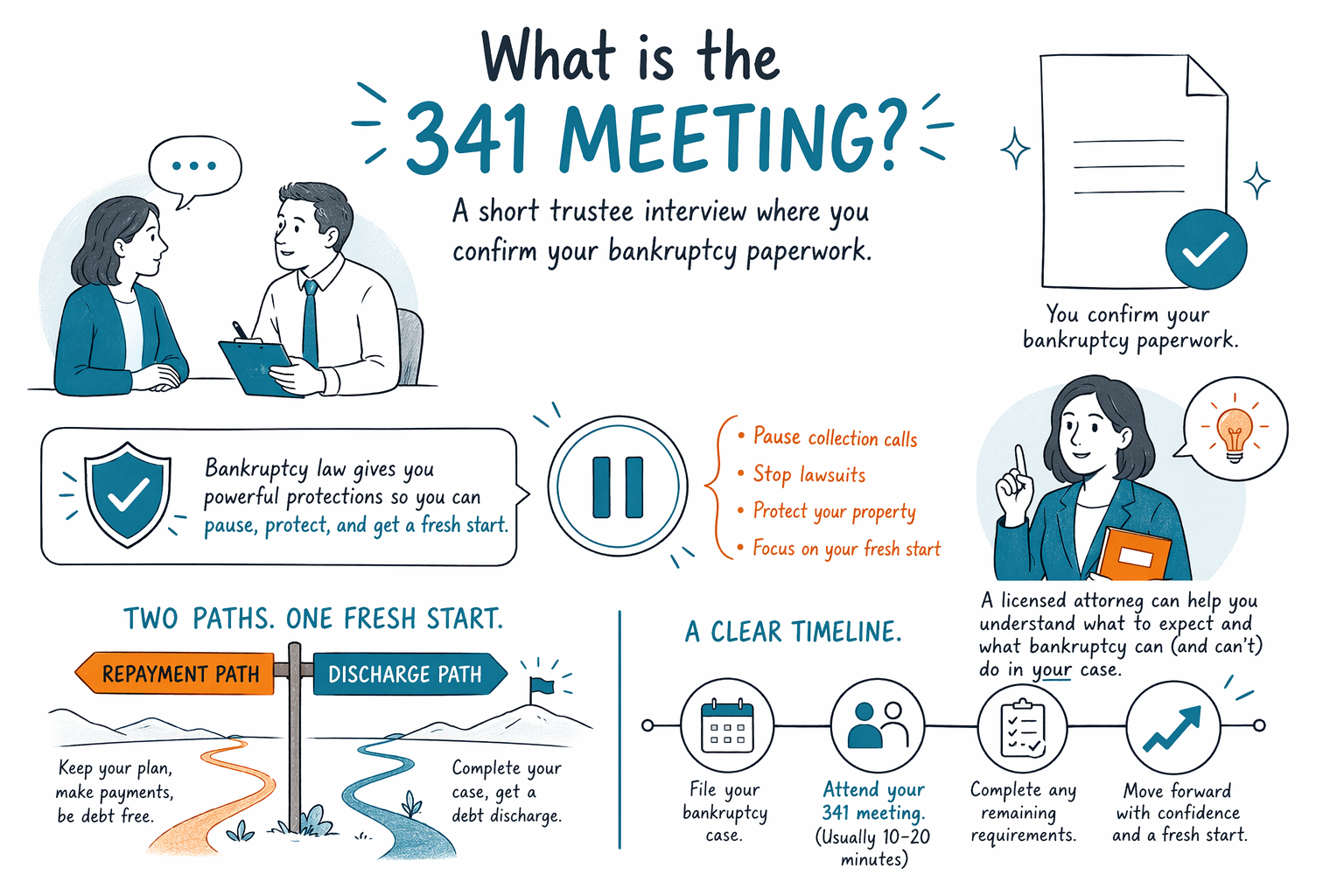
First: what the 341 meeting is (and what it is not)
The 341 meeting is the name of a required bankruptcy “meeting of creditors.” It happens early in the bankruptcy case, after you file.
At the meeting, a trustee (not a judge) asks you questions under oath about your identity, your debts, and what you listed in your bankruptcy paperwork. Creditors are allowed to attend, but many do not.
This is not a court hearing where the judge decides your case that day. It’s also not the place where you “argue” your case like a trial. The goal is to confirm the basic facts and that your documents are complete and accurate.
- Trustee-led question-and-answer format
- Usually short and focused on your paperwork
What you should expect at the 341 meeting
Most 341 meetings are calm and procedural. You’ll usually hear how the meeting will work, then answer questions one by one.
Common questions include:
- Basic ID confirmation (for example, your name and sometimes your address)
- Whether you filed the paperwork truthfully and completely
- Whether you understand that bankruptcy is a legal process
- Questions about where you live and whether you’ve had certain changes (like a new job) since you filed
Your attorney will typically review your answers with you beforehand, so you understand what to say if a question feels unclear.
- Bring your paperwork (your attorney will tell you what to have)
- Answer clearly and honestly—no guesses
Can creditors object at the 341 meeting?
Sometimes a creditor attends, but it’s not very common. Even when creditors are present, the 341 meeting is usually not where the biggest disputes get decided.
If there’s a serious issue—like the trustee believes information is missing, or there may be a problem with how debts or assets were handled—there can be follow-up requests and sometimes later court motions. Your attorney can help you understand what to expect in your specific situation.
If you’re facing wage garnishment, foreclosure, or lawsuits, it’s normal to feel urgent. In many cases, once the bankruptcy case is filed, the automatic stay can pause many collection actions while the case moves forward. Your attorney will explain how that applies to your facts.
- Often short and routine even if a creditor shows up
- Big issues usually come later if they happen at all
How long does it take, and what happens afterward?
The meeting is often brief—frequently around 5–20 minutes—though timing can vary. You should plan to be available longer if the schedule runs behind.
After the 341 meeting, the case moves through its next steps. In a Chapter 7 case, the trustee reviews the information and determines whether there’s anything to administer. In a Chapter 13 case, the focus shifts to your repayment plan and confirming eligibility for the plan.
Because bankruptcy rules can vary, your next steps may depend on your chapter, your district, and your specific situation. Your attorney will map the timeline for your case so you know what comes next.
- Usually quick, but allow extra time
- Next steps depend on Chapter 7 vs. Chapter 13
Important limits: bankruptcy doesn’t erase every type of debt
A 341 meeting is about verifying your case details—not guaranteeing that every debt will be removed. Bankruptcy outcomes depend on your individual facts and the chapter you file.
In general, many debts can be discharged in consumer bankruptcy, but some usually survive. Examples often include most student loans (not always, but often), recent income taxes, child support and alimony, many court fines/penalties, and debts related to fraud or certain wrongdoing. Outcomes vary by case.
That’s why it’s so important to meet with a licensed bankruptcy attorney and confirm what may be dischargeable in your situation. Also remember: bankruptcy law, exemptions, procedures, and how the means test is applied can vary by state and by judicial district.
- Some debts often survive—don’t assume “everything is gone”
- Rules vary by state and district; confirm with an attorney
How CleanSlate Match helps you get ready (free) with a licensed attorney
CleanSlate Match is a FREE matching service. We connect you with a licensed bankruptcy attorney near you for an initial consultation. We are not a law firm, we are not a lawyer, and we do not file bankruptcy or create an attorney-client relationship.
If you’re overwhelmed and worried about the 341 meeting, the best next step is to get matched so a licensed attorney can explain what questions to expect and what your specific debts and documents mean for your case.
To start, visit get matched and share your name, phone, your state, your preferred language, and a general sense of what’s going on. Don’t send Social Security numbers or bank details—just general information.
You can also explore guides and chapters to learn the basics of Chapter 7 vs. Chapter 13 before you talk with an attorney.
- Free matching service—no attorney fees for you to start
- A licensed attorney will confirm your options and what a 341 meeting means for your case
The 341 meeting is a short trustee interview where you confirm your bankruptcy paperwork, and a licensed attorney can help you understand what to expect and what bankruptcy can (and can’t) do in your case.
Common questions
Do I have to attend the 341 meeting if I can’t take time off work?
Usually, yes. The 341 meeting is required, and missing it can cause delays or problems in the case. If you have a scheduling conflict, contact your bankruptcy attorney right away to discuss options.
Will the judge be there at the 341 meeting?
Typically, no. The trustee runs the meeting and asks questions. A judge is generally not the person conducting the 341 meeting.
What should I bring to the 341 meeting?
Your attorney will tell you what to bring for your district and situation. In general, have your identification and bring any documents your lawyer requests, especially those connected to the information in your filing.
Will I get in trouble if I don’t remember everything?
It’s important not to guess or guess wrong. If you don’t understand a question, you can say so and your attorney can help guide you on the correct approach before the meeting. Honesty and clarity matter.
Does attending the 341 meeting mean my debts will be wiped out?
Not automatically. Some debts often can be discharged, but many types of debt usually survive bankruptcy (such as many student loans, certain recent taxes, child support/alimony, and debts involving fraud). Your attorney can explain what likely applies in your case.
How much will a bankruptcy attorney cost if I’m worried about money?
Many consumer bankruptcy attorneys charge a flat fee, plus the court filing fee and a small required credit-counseling fee. The exact cost depends on the chapter (Chapter 7 vs. Chapter 13), the complexity of your case, and your district—so any number you hear should be treated as an estimate. A licensed attorney can confirm the likely range for your area.
Related help
A plain-language comparison of the two main consumer bankruptcies, when each makes sense, and how a lawyer helps you decide.
Open → What Debt Bankruptcy Can and Can't EraseWhich debts bankruptcy wipes out, which ones survive (like most student loans and child support), and why it matters.
Open → Will I Lose My House or Car in Bankruptcy?How exemptions and the two chapters affect your home and car — and why many people keep both.
Open →