Guides
What is bankruptcy fraud?
Bankruptcy fraud means giving false information or hiding information in a bankruptcy case on purpose. If you are worried because you made a mistake, there is a big difference between an honest error and fraud, and a licensed attorney can help explain that calmly.
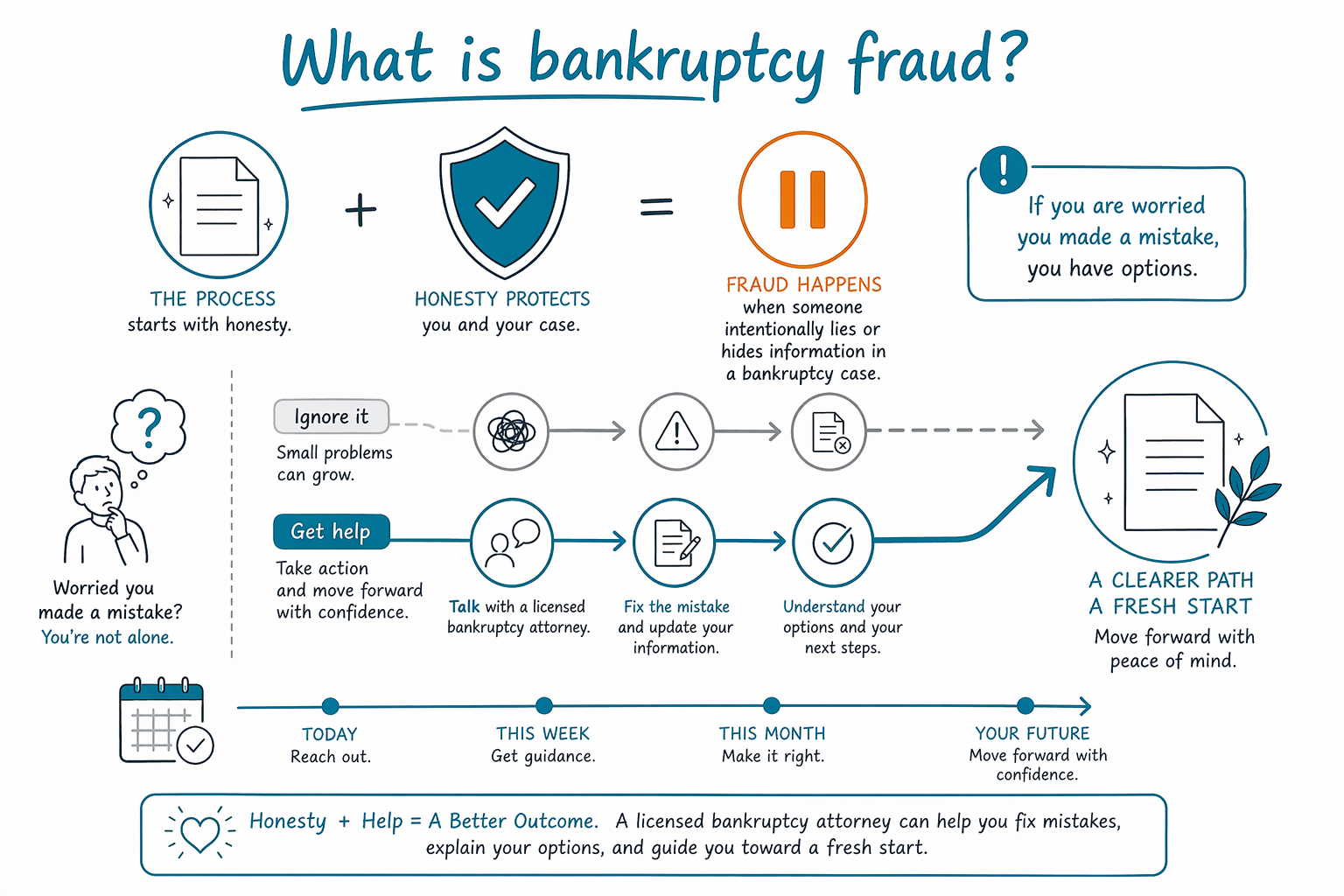
What bankruptcy fraud means
Bankruptcy fraud is when someone lies, hides property, hides income, uses fake documents, or leaves out important information in a bankruptcy filing on purpose. It can also include transferring assets to friends or family to keep them out of the case, or filing with a false identity.
Most people who are stressed about debt are not trying to commit fraud. Many filings involve simple mistakes, missing paperwork, or confusion about what must be disclosed. Honest mistakes can often be corrected, but you should not guess.
Because bankruptcy rules vary by state and federal district, a local attorney can tell you what must be listed in your case and how to fix a problem before it becomes a bigger issue.
Why full honesty matters in bankruptcy
Bankruptcy asks you to list your debts, property, income, recent transfers, and other financial information so the court and trustee can review your case. If something is left out, even by accident, it can slow the case down or cause problems later.
Fraud is serious because the court depends on accurate information. In some cases, a dishonest filing can lead to denial of discharge, dismissal of the case, loss of exemptions, fines, or other consequences. The exact result depends on the facts and the court.
The safest step is simple: tell the truth, bring documents, and ask a licensed bankruptcy attorney to review anything you are unsure about before filing.
What bankruptcy can and cannot do
Bankruptcy can help stop most collection activity once a case is filed, and it may help with credit cards, medical bills, lawsuits, wage garnishment, and foreclosure timing. Chapter 7 may wipe out some unsecured debts if you qualify, while Chapter 13 uses a repayment plan over time. Many people can keep a home or car with the right case and exemptions.
But bankruptcy does not erase everything. Some debts usually survive, including most student loans, recent income taxes, child support and alimony, many court fines, and debts tied to fraud. Outcomes depend on the individual case and the type of debt.
A lawyer near you can explain which debts may be included, which may remain, and whether Chapter 7 or Chapter 13 makes more sense for your situation. You can also read more in our bankruptcy guides and chapter overviews.
If you think a mistake was made
If you already filed and now realize something was left out, do not panic and do not try to hide it further. In many cases, the issue can be corrected with amended paperwork or by explaining the mistake to the trustee or court.
- Gather the papers related to the missing item.
- Write down exactly what was omitted or entered wrong.
- Contact a licensed bankruptcy attorney in your state as soon as possible.
- Do not sign new papers you do not understand.
CleanSlate Match is a free matching service, not a law firm and not your lawyer. We can connect you with a licensed bankruptcy attorney near you, and you should confirm the attorney’s bar license before hiring.
What it may cost to get help
Most consumer bankruptcy attorneys charge a flat fee, plus the court filing fee and a small required credit-counseling fee. The real amount depends on the chapter, the complexity of the case, and your district, so any range is only a general estimate, not a quote.
Simple Chapter 7 cases often cost less than Chapter 13 cases because Chapter 13 usually involves a repayment plan and more court involvement. Complicated assets, business issues, lawsuits, or urgent foreclosure or garnishment problems can also raise the cost.
If you want help finding a lawyer, you can get matched for free and share only your contact details and general situation. Do not send Social Security numbers, bank numbers, or full account details through a matching form.
Bankruptcy fraud is intentional dishonesty in a bankruptcy case, and if you are worried about a mistake, a licensed bankruptcy attorney can help you fix it and explain your options calmly.
Common questions
Is bankruptcy fraud the same as making a mistake on my forms?
No. Fraud usually means intentional lying or hiding information. A mistake can sometimes be fixed, but you should talk to a licensed bankruptcy attorney right away if anything looks wrong.
Can bankruptcy erase all of my debts?
No. Bankruptcy can help with many debts, but some usually survive, like most student loans, recent taxes, child support, alimony, many fines, and debts from fraud. The result depends on the case and the rules in your state and district.
What should I bring to a bankruptcy lawyer?
Bring a list of debts, recent bills, court papers, pay stubs or other income proof if you have them, and any papers about property or recent transfers. A lawyer can tell you what else is needed, and you do not need to share account numbers in a matching form.
Related help
A plain-language comparison of the two main consumer bankruptcies, when each makes sense, and how a lawyer helps you decide.
Open → What Debt Bankruptcy Can and Can't EraseWhich debts bankruptcy wipes out, which ones survive (like most student loans and child support), and why it matters.
Open → Will I Lose My House or Car in Bankruptcy?How exemptions and the two chapters affect your home and car — and why many people keep both.
Open →