Guides
How often can you file bankruptcy?
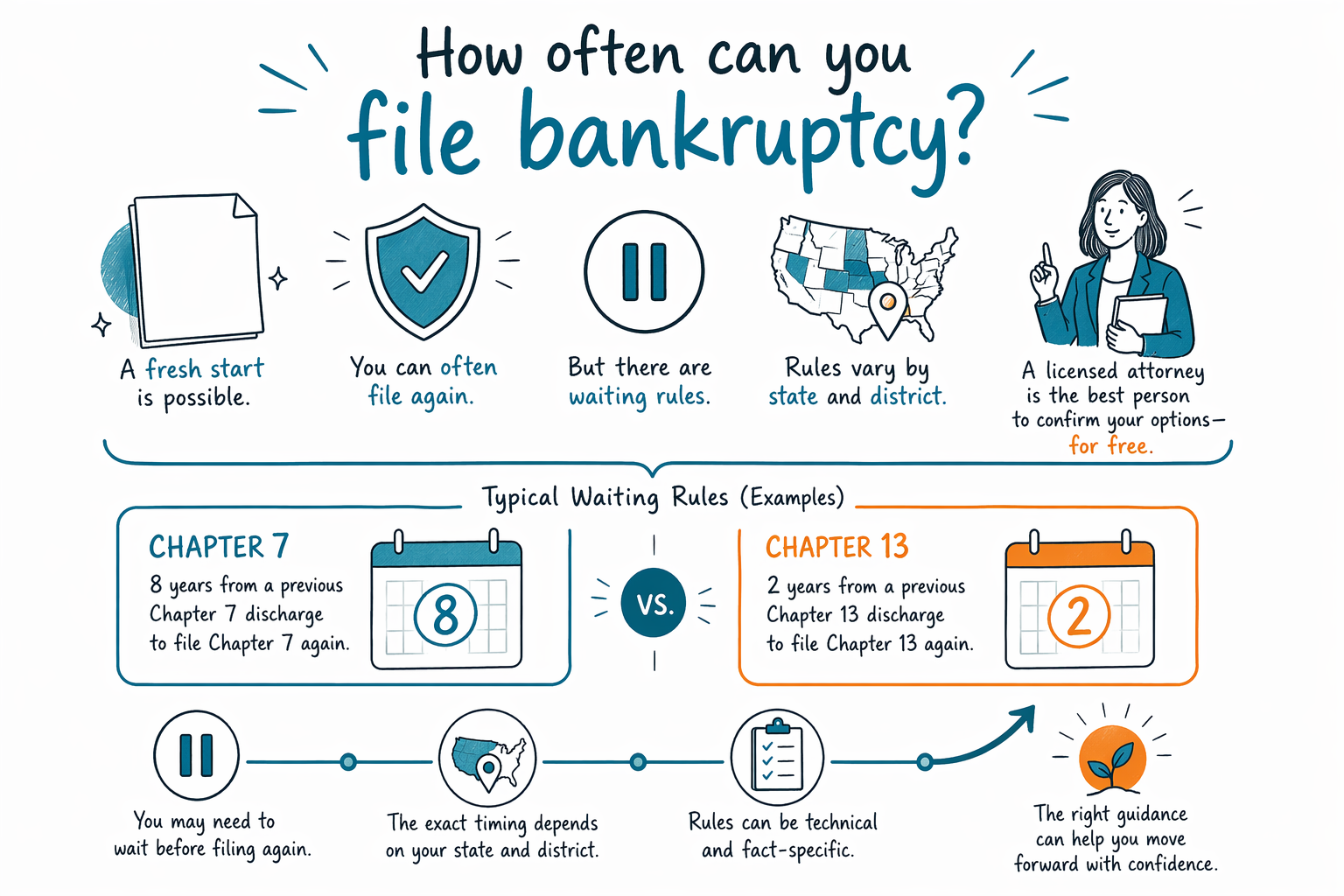
You can file bankruptcy more than once, but the waiting period depends on the chapter you filed before and the chapter you want now. A licensed bankruptcy attorney can tell you what timing rules apply in your state and district.
The short answer
There is no single national rule that says you can only file bankruptcy one time. In the U.S., people can file again after certain waiting periods, and those waiting periods depend on whether your last case was Chapter 7 or Chapter 13, and whether you want to file Chapter 7 or Chapter 13 now.
That said, filing again does not automatically mean you can get the same result. Bankruptcy rules vary by state and federal district, and the court will look at your prior case, your timing, and your situation before deciding what happens next.
The safest next step is to speak with a licensed bankruptcy attorney in your area. CleanSlate Match is a free matching service, not a law firm, and not your lawyer. We can help connect you with an attorney near you for a general review.
- Rules vary by state and federal district.
- A prior bankruptcy can affect your next case.
- A lawyer can confirm the exact waiting period for your situation.
How the timing usually works
The waiting period is usually measured from the filing date or discharge date of your last case, depending on the chapter combination. For example, a prior Chapter 7 case can affect how soon you may file Chapter 7 again, and it can also affect when you may file Chapter 13.
A prior Chapter 13 case can also affect future filing dates. In some situations, a person may file again sooner if the earlier case was dismissed or if the new case is filed for a different reason, but this is very fact-specific.
Because these rules are technical and can change, it is important not to guess. A local attorney can look at your court history and tell you whether a new case may be possible now, later, or not in the way you expect.
- The timing can depend on the chapter you filed before.
- Dismissed cases can be treated differently from completed cases.
- The exact rule can change by case history and district.
What bankruptcy can and cannot do
Bankruptcy can help many people stop collection calls, lawsuits, garnishments, and foreclosure activity quickly because the automatic stay usually starts when the case is filed. In many cases, people can keep some or all of their home or car using exemptions or a Chapter 13 payment plan.
But bankruptcy does not erase every debt. Some debts usually survive, including most student loans, recent income taxes, child support and alimony, most court fines, and debts from fraud. Whether a specific debt is discharged depends on the facts and the law that applies to your case.
That is why it helps to get a careful review before filing again. A new case may help with pressure from creditors, but it is not a promise that every bill goes away.
- The automatic stay may pause many collection actions right away.
- Some debts usually survive bankruptcy.
- Whether you can keep property depends on exemptions, equity, and the chapter.
What to do before you file again
Before you file a new case, gather only the basics: your name, phone number, optional email, state, a general description of your situation, and your preferred language. You do not need to share your Social Security number, bank account numbers, credit card numbers, or full financial account details just to ask for help.
Then ask a licensed bankruptcy attorney these simple questions:
1. How long do I have to wait based on my last case?
2. Would Chapter 7 or Chapter 13 make more sense for my situation?
3. Could bankruptcy help stop garnishment, foreclosure, or a lawsuit?
4. What debts might still remain after the case?
Most consumer bankruptcy attorneys charge a flat fee, plus the court filing fee and a small required credit-counseling fee. The total depends on the chapter, the district, and how complex the case is, so any range you hear is only an estimate, not a quote.
- Only share contact and general intent when asking for help.
- Ask about timing, chapter choice, and debts that may survive.
- Always confirm the attorney is licensed and in good standing.
How CleanSlate Match can help
CleanSlate Match is a free service that helps connect people with a licensed bankruptcy attorney near them. We do not file bankruptcy, give legal advice, or become your lawyer.
If you are overwhelmed and not sure whether you can file again, a local attorney can explain your options in plain language. That can include whether a new filing is possible now, whether you need to wait, and whether another debt-relief option may fit better.
If you are ready, get matched for a free connection, or read more general info in our guides and chapter comparison pages.
- Free matching service.
- Not a law firm and not your lawyer.
- A licensed attorney can review your history and give case-specific guidance.
You can often file bankruptcy again, but the waiting rules are technical, vary by state and district, and a licensed attorney is the best person to confirm your options for free through CleanSlate Match.
Common questions
Can I file bankruptcy more than once?
Yes, in many cases people can file again after certain waiting periods. The exact timing depends on the chapter you filed before, the chapter you want now, and your court district.
Will filing again erase all my debts?
No. Bankruptcy can help with many debts, but some usually survive, such as most student loans, recent income taxes, child support and alimony, most court fines, and debts from fraud.
Can bankruptcy stop a garnishment or foreclosure right away?
Often, yes. The automatic stay usually starts when the case is filed and can pause many collection actions, but the exact effect depends on the case and the court.
Do I need to know my account balances before I contact you?
No. We only collect contact information and general intent, such as your state, preferred language, and a general description of your situation.
Related help
A plain-language comparison of the two main consumer bankruptcies, when each makes sense, and how a lawyer helps you decide.
Open → What Debt Bankruptcy Can and Can't EraseWhich debts bankruptcy wipes out, which ones survive (like most student loans and child support), and why it matters.
Open → Will I Lose My House or Car in Bankruptcy?How exemptions and the two chapters affect your home and car — and why many people keep both.
Open →