Guides
Can i be fired for filing bankruptcy?
Usually, a private employer cannot fire you just because you filed bankruptcy. But the rules can be more complicated for hiring, government jobs, and specific facts, so it is smart to speak with a licensed bankruptcy attorney in your area.
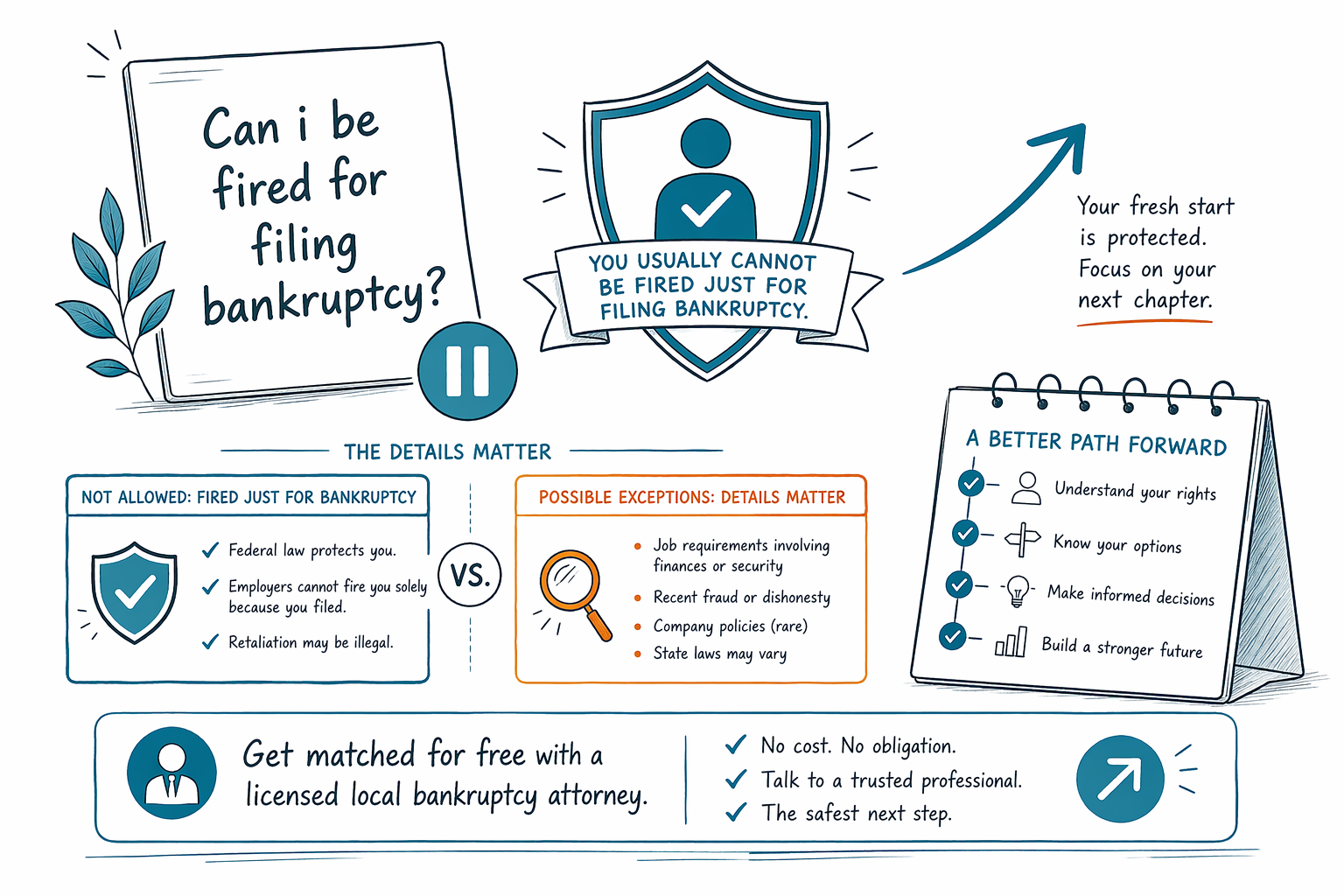
Short answer: usually no, but there are important limits
In many cases, your current employer cannot legally fire you only because you filed a consumer bankruptcy case. That protection is an important part of bankruptcy law.
But this does not mean bankruptcy protects every job situation. Problems can come up if an employer gives a different reason for discipline, if you are applying for a new job, or if your case involves facts that need a lawyer to review closely. Bankruptcy rules and employment issues can also depend on federal law, state law, and the court where the case is handled.
So the honest answer is: usually you cannot be fired just for filing bankruptcy, but you should not rely on a general article for a final answer about your own job. A licensed bankruptcy attorney in your state can explain how the law applies to your situation.
What bankruptcy law generally protects
Bankruptcy law generally says a private employer cannot terminate your employment, or discriminate against you with respect to employment, only because you filed bankruptcy, were insolvent before filing, or did not pay a debt that can be addressed in bankruptcy.
That is good news for people who are scared that asking for help will automatically cost them their job. Filing bankruptcy is a legal process created to give honest people a chance to deal with overwhelming debt. It is not a crime, and many working people file.
Bankruptcy can also trigger the automatic stay when the case is filed. The automatic stay pauses most collection activity, including many lawsuits, wage garnishments, foreclosures, and collection calls. That relief can help you stabilize work and home life while you figure out your next step.
Still, these protections have limits. Bankruptcy usually does not erase every debt. Some debts often survive, including most student loans, recent income taxes, child support and alimony, most court fines, and debts tied to fraud. Outcomes depend on the facts of the case and the law in your state and district.
Where people still run into trouble
The biggest practical issue is proof. An employer may not say, "We fired you for bankruptcy." They may give another reason, and the facts may be disputed. That is one reason it helps to speak with a licensed attorney promptly if you think bankruptcy and job action happened close together.
Another issue is hiring. The rules are often discussed differently when someone is applying for a job instead of already employed. Government employers and private employers may be treated differently in some situations. Some jobs involving security clearance, handling money, or background checks may raise extra questions. That does not mean filing bankruptcy automatically disqualifies you. In some settings, getting debt under control may even look better than falling further behind. But it is a fact-specific area.
If your wages are being garnished, a bankruptcy filing may stop many garnishments through the automatic stay once the case is filed. If foreclosure or a car repossession is near, timing matters. Many people use Chapter 7 or Chapter 13 not only to address debt, but also to stop immediate collection pressure. You can learn more in our guides and overview of chapters.
What to do if you are worried about your job
Try to stay calm and gather basic facts. You do not need to have every answer before you ask for help.
- Write down what happened and when: filing date, wage garnishment, warnings at work, schedule changes, or comments from a supervisor.
- Save documents: pay stubs, employee handbook pages, emails, texts, discipline notices, and any court or garnishment papers.
- Do not share more financial detail than necessary with a matching service or website.
- Speak with a licensed bankruptcy attorney in your area as soon as you can, especially if you were fired, demoted, or denied pay after filing.
- Ask the attorney whether bankruptcy law, state employment law, or both may matter in your case.
If you are not sure where to start, CleanSlate Match can help you connect with a licensed bankruptcy attorney near you. CleanSlate Match is a free matching service, not a law firm, not a lawyer, and does not file bankruptcy or create an attorney-client relationship.
What filing bankruptcy may cost
Many people wait too long because they assume bankruptcy is out of reach. The truth is more mixed: there are real costs, but many consumer bankruptcy attorneys charge a flat fee rather than billing by the hour.
In many areas, a simple Chapter 7 attorney fee may fall roughly in the range of about $1,000 to $2,500, plus the court filing fee, plus a small required credit-counseling and education cost. Chapter 13 attorney fees are often higher, sometimes roughly $2,500 to $6,000 or more depending on the district, complexity, and local court practices, plus the court filing fee and required course costs. These are general ranges, not quotes.
The real amount depends on where you live, whether you own a home, how much paperwork is involved, whether there are lawsuits or garnishments, whether your income or assets make the case more complicated, and which chapter fits your situation. A lawyer can explain the likely total cost and payment options after learning the facts.
Be careful with anyone who promises a low price without reviewing your situation, or promises a specific result. Bankruptcy law varies by state and judicial district, including exemptions, means test issues, local filing practices, and Chapter 13 plan rules.
How CleanSlate Match can help
If you are scared about losing your job, a garnishment, or falling behind on bills, you do not have to sort it out alone. CleanSlate Match helps people across the United States, including people who prefer another language, connect with a licensed bankruptcy attorney near them.
The service is free for the person looking for help. We only collect basic contact information and general intent, such as your name, phone, optional email, state, preferred language, and a general description of what is going on. We do not ask for a Social Security number, bank account numbers, credit card numbers, or detailed account balances.
When you speak with any attorney, ask direct questions: Are you licensed in my state? What chapter might fit? What debts might remain after bankruptcy? Could filing help stop a garnishment or foreclosure? What are your flat fees, court fees, and course costs? You can get matched for free and then confirm the attorney's bar license before you hire anyone.
You usually cannot be fired just for filing bankruptcy, but the details matter, so getting matched for free with a licensed local bankruptcy attorney is the safest next step.
Common questions
Can my boss fire me just because I filed Chapter 7 or Chapter 13?
Usually, a current private employer cannot fire you only because you filed bankruptcy. But job situations can be fact-specific, and the legal analysis can depend on details and location, so talk with a licensed attorney in your area.
Will bankruptcy show up at work?
Not every employer will know, but it can come up in some situations, such as a wage garnishment stopping, a background check, or if you tell them. Whether that matters legally depends on the facts.
Can a new employer refuse to hire me because of bankruptcy?
Hiring issues can be more complicated than firing from a current job. Government and private employers may be treated differently in some situations, so this is a good question to ask a local attorney.
If I file bankruptcy, will all my debts disappear?
No. Bankruptcy can help with many debts, but it does not erase every debt in every case. Debts that often survive include most student loans, recent income taxes, child support, alimony, most court fines, and some debts involving fraud.
Can bankruptcy stop a wage garnishment so I can keep up at work and home?
Often, yes. When a bankruptcy case is filed, the automatic stay usually stops many collection actions, including many wage garnishments, lawsuits, and foreclosure actions. Timing and exceptions matter.
Is CleanSlate Match my lawyer?
No. CleanSlate Match is a free matching service, not a law firm and not your lawyer. It can help you connect with a licensed bankruptcy attorney near you, but it does not give legal advice or file your case.
Related help
A plain-language comparison of the two main consumer bankruptcies, when each makes sense, and how a lawyer helps you decide.
Open → What Debt Bankruptcy Can and Can't EraseWhich debts bankruptcy wipes out, which ones survive (like most student loans and child support), and why it matters.
Open → Will I Lose My House or Car in Bankruptcy?How exemptions and the two chapters affect your home and car — and why many people keep both.
Open →