Guides
Do I Need a Bankruptcy Lawyer?
You can file bankruptcy without a lawyer in some situations, but it’s risky—especially if you have a foreclosure, a wage garnishment, a lawsuit, or complicated debts. A licensed bankruptcy attorney helps you choose the right chapter and avoid costly mistakes.
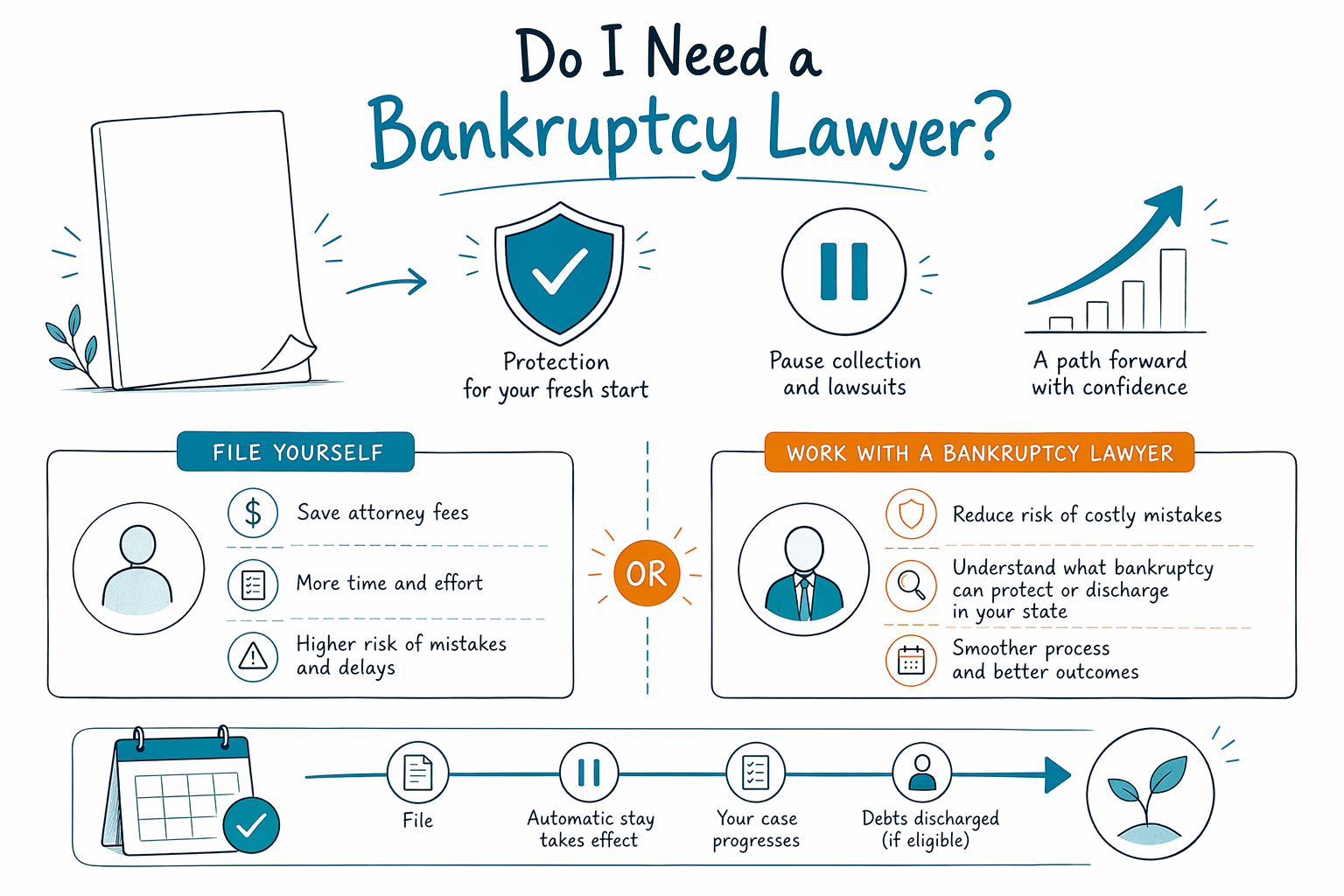
A direct answer: Do you need a bankruptcy lawyer?
In many cases, people *can* file on their own, but whether it’s a good idea depends on your facts and where you live.
If your case is straightforward—limited assets, few creditors, and you understand the forms—self-filing may be possible. Still, bankruptcy paperwork and court deadlines are unforgiving, and small errors can delay the case or affect results.
A licensed bankruptcy attorney is often worth it because they help you pick the correct chapter (usually Chapter 7 or Chapter 13), prepare required documents, and guide you through exemptions and protections.
Also, the rules vary by state and by federal judicial district, and they can change over time—so your safest “real-world” answer comes from an attorney licensed in your area.
- Get matched for free to a licensed bankruptcy attorney near you: [get matched](/get-matched/).
- Learn the basics first in: [chapters](/chapters/).
When a lawyer is especially important
You may want to strongly consider legal help if anything below applies. These situations commonly involve higher stakes, extra forms, or more scrutiny.
- A foreclosure is pending or your mortgage servicer has started serious steps (notice, scheduled sale, or filing).
- You’re facing wage garnishment or a lawsuit.
- You have tax debts, or you’re not sure which debts are dischargeable.
- You have property you care about (home, car, rental property) and need to understand exemptions.
- You’ve filed bankruptcy before, or you’re close to filing again.
Even if you feel overwhelmed, you don’t have to navigate this alone. A consultation is usually where an attorney can explain what you might qualify for and what to expect—slowly and clearly.
- If you’re worried right now, start with [guides](/guides/).
What an attorney actually does (in plain language)
A bankruptcy attorney’s job isn’t just “putting in paperwork.” It’s also about strategy, timing, and compliance.
Typically, a licensed attorney will:
1. Review your situation and help determine whether Chapter 7 or Chapter 13 fits your goals.
2. Explain the “means test” (when it applies) and how income affects Chapter 7 eligibility.
3. Help you list debts and assets correctly, and explain what bankruptcy may protect (like certain equity in a home or car, depending on state exemptions).
4. Identify debts that usually survive bankruptcy (so you’re not surprised later).
5. File the case and help you follow the process, including required credit counseling steps and the meeting of creditors.
Because the process is procedural, lawyers also help reduce the chance that you miss a deadline or make a mistake that could slow your case.
- Bankruptcy is personal—what works for one person may not work for another.
What happens if you file without a lawyer? (The real risks)
Filing on your own can be tempting because it looks cheaper at first. But a DIY case can cost you time, money, and stress if problems come up.
Common risks include:
- Filling out forms incorrectly or leaving out required information.
- Misunderstanding exemptions (which vary by state) and accidentally losing property.
- Choosing the wrong chapter for your goals.
- Not handling debts that often aren’t fully discharged.
- Missing deadlines or not responding properly if a creditor or trustee raises an issue.
There’s another important point: outcomes are not guaranteed. An attorney can’t promise results, but they can help you avoid preventable errors and understand what bankruptcy can realistically do for your specific situation.
- If you want to explore your options, you can still get matched for free: [get matched](/get-matched/).
What bankruptcy can and can’t erase (important honesty)
Bankruptcy can give many people a fresh start, but it doesn’t erase every type of debt for everyone.
In general, some debts usually survive bankruptcy, including:
- Most student loans (often very hard to discharge)
- Recent income taxes (depending on timing and other details)
- Child support and alimony
- Many court fines and certain penalties
- Debts from fraud or similar misconduct
Also, how much you keep—like your home or car—depends on your state’s exemption rules and the chapter you file. The rules vary by state and district, so the best next step is to confirm the details with a licensed bankruptcy attorney in your area.
If you’re in a rush (foreclosure, garnishment, a lawsuit), don’t wait. When a case is filed, an automatic stay generally pauses many collections, garnishments, foreclosures, and some lawsuits—often giving immediate breathing room.
- Rules vary by state/district, so always confirm specifics with an attorney you trust.
How much does a bankruptcy attorney cost? (Flat fees, plus court costs)
Many bankruptcy attorneys use a flat fee for consumer cases, rather than hourly billing. That can help you plan when you’re already stressed about money.
Typical costs you may see include:
1. A flat attorney fee (varies by the chapter and complexity).
2. Court filing fees (these are separate and set by the court).
3. A small required credit-counseling fee (required by federal law).
While CleanSlate Match can’t quote a specific price for your case, many people find that attorney fees commonly fall in the range of about $1,500–$3,500 for a Chapter 7 case and about $3,000–$6,000+ for a Chapter 13 case, depending on your district and complexity. Court filing fees are often a few hundred dollars for Chapter 7 and several hundred dollars for Chapter 13, but the exact amounts depend on current court schedules.
What can make fees higher or lower?
- The chapter (Chapter 7 vs. Chapter 13)
- Complexity (multiple properties, business debts, contested issues)
- Whether you have special circumstances the attorney must address
Ranges are not guarantees or quotes. A licensed bankruptcy attorney can explain what’s likely for your situation after reviewing your facts.
- This service is free to you—CleanSlate Match helps connect you with a licensed attorney: [get matched](/get-matched/).
You may be able to file yourself, but a bankruptcy lawyer is usually the safest way to avoid costly mistakes and understand what bankruptcy can realistically protect or discharge in your specific state.
Common questions
If I file on my own, do I still get the automatic stay?
Often, yes—the automatic stay is triggered when a bankruptcy case is filed, regardless of whether you have a lawyer. However, the stay’s details and how creditors respond can vary by case, and legal issues can still arise, so it’s smart to confirm your situation with a licensed bankruptcy attorney in your district.
Will a bankruptcy lawyer cost me a percentage of my debt?
No. CleanSlate Match is a free matching service, and participating attorneys do not take a share of your debt. Many attorneys charge a flat fee plus required court and counseling fees; the exact structure depends on the attorney and case.
Does bankruptcy always wipe out my debt?
Not always. Some debts usually survive bankruptcy, including most student loans, recent income taxes, child support/alimony, many fines/penalties, and debts involving fraud. Whether you can discharge a debt depends on the facts and the law in your state and federal district.
How do I confirm I’m talking to the right lawyer?
After you’re matched, you can confirm the attorney is licensed in your state and that they handle bankruptcy cases. You can also ask about their flat-fee structure, what’s included, and what documents you’ll need to gather.
Related help
A plain-language comparison of the two main consumer bankruptcies, when each makes sense, and how a lawyer helps you decide.
Open → What Debt Bankruptcy Can and Can't EraseWhich debts bankruptcy wipes out, which ones survive (like most student loans and child support), and why it matters.
Open → Will I Lose My House or Car in Bankruptcy?How exemptions and the two chapters affect your home and car — and why many people keep both.
Open →