Guides
Can creditors call after bankruptcy?
In many cases, after you file consumer bankruptcy, creditors’ collections should stop or pause soon because an automatic stay goes into effect. Still, some calls may happen, and certain debts may not be fully erased—so timing and details matter.
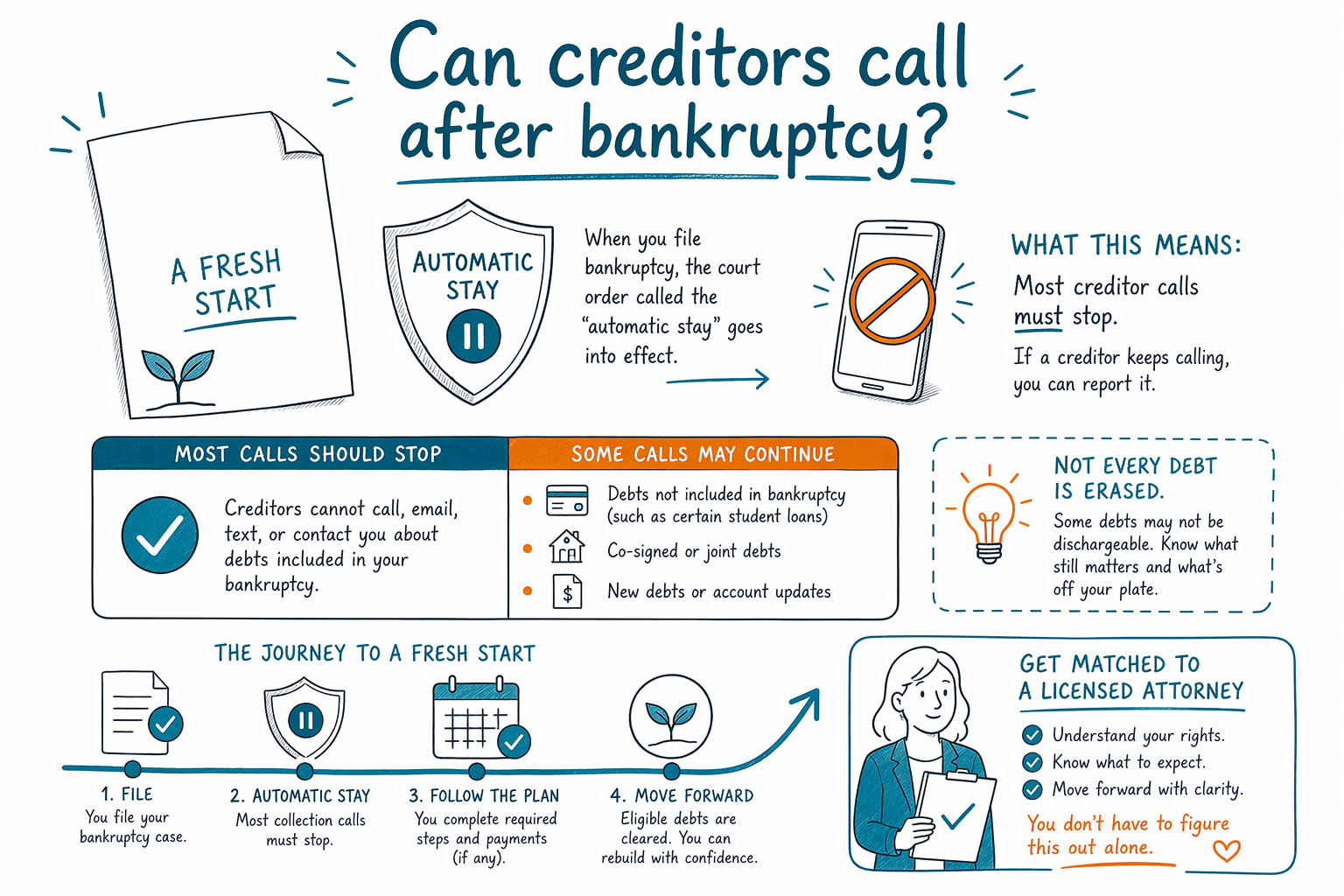
The direct answer: Can creditors call after bankruptcy?
Often, creditors should not be calling to collect once your bankruptcy case is filed, because the “automatic stay” usually pauses most collection activity (calls, letters, lawsuits, and some collection efforts).
That said, calls can still happen in a few situations: the creditor may not have received notice yet, they may be trying to collect a debt that isn’t affected the same way, or they may misunderstand what the stay covers. You do not have to tolerate harassment—there are ways your attorney can address it.
Because bankruptcy rules and how quickly notices are processed can vary by state and by federal court district, the best guidance for your exact situation is from a licensed bankruptcy attorney in your area.
What normally happens right after you file (the “automatic stay”)
When you file Chapter 7 or Chapter 13, the automatic stay generally goes into effect immediately. In plain terms, it’s the court order that tells many creditors to stop most collection actions while your case is pending.
This usually includes stopping efforts like:
- Phone calls and letters aimed at collecting most unsecured debts
- Lawsuits or collection lawsuits that were not already concluded
- Many foreclosure actions and wage garnishment actions once the case is filed
Your attorney can also help you confirm how your specific creditors are handling the stay. If calls continue after filing, it’s often helpful to keep records (dates/times/what was said).
Why you might still get calls
Even with the automatic stay, it’s possible to receive calls after filing for reasons that are not your fault.
Common causes include:
- The creditor (or their collector) hasn’t updated its system yet
- They call the wrong person or on the wrong account
- They are attempting to collect a debt that usually survives bankruptcy or is not fully covered
- The case details affect which actions are paused and which may continue
If you’re dealing with wage garnishment, foreclosure, or a lawsuit, the timing can be especially important. Ask a licensed bankruptcy attorney what to expect in your court district and what to do if a creditor keeps contacting you.
Some debts usually do not go away (so collection can continue in limited ways)
Bankruptcy can help many people get a reset, but it does not automatically erase every type of debt. Some debts often survive, meaning you may still owe them even after the bankruptcy process.
Common examples include debts that often are not discharged:
- Most student loans
- Recent income taxes in certain circumstances
- Child support and alimony
- Many court fines and penalties
- Debts involving fraud or certain wrongful conduct (case-specific)
Important: whether a particular debt is discharged depends on the facts and the law in your district. A bankruptcy attorney can review your situation and tell you what is likely to be discharged under Chapter 7 or Chapter 13.
Chapter 7 vs. Chapter 13: does it affect calls?
It can. Chapter 7 and Chapter 13 both generally use the automatic stay when you file, but they have different goals and timelines.
- In Chapter 7, many eligible debts are discharged, typically after the case progresses through required steps.
- In Chapter 13, you usually repay creditors through a court-approved payment plan for a period of time, so some creditor contact may relate to the plan and proof of claim process.
Because practices vary by district and the details of your plan, your attorney can explain what contact is normal during each step and what is not.
What to do if creditors keep calling after you file
You can take practical steps now. These are general educational ideas—your attorney can tailor them to your case.
- Collect basic info: write down the date/time, phone number, name (if provided), and what they said.
- Don’t argue on the phone about legal issues—ask them to stop contacting you and to communicate in writing with your case information.
- Tell your bankruptcy attorney quickly if calls continue after filing, especially if they’re demanding payment or threatening actions.
- Keep copies of letters/emails and any voicemails.
A licensed bankruptcy attorney can also confirm whether the call is a stay issue, a discharge issue, or a debt type that may survive. If you’re feeling overwhelmed, that’s exactly what your attorney is there to help with—calmly and clearly.
Need help figuring out what will happen in your case? (Free matching)
If you’re worried creditors will keep calling—or you’re not sure which debts might survive—getting connected with a licensed bankruptcy attorney can bring real clarity.
CleanSlate Match is a FREE matching service. We do not file bankruptcy and we are not your lawyer, but we can help you connect with a licensed bankruptcy attorney near you for an initial consultation.
You can start at get matched. When you talk with an attorney, confirm they are licensed to practice in your state and federal bankruptcy court district.
After bankruptcy, most creditor calls should stop because the court order “automatic stay” kicks in, but some calls may continue and some debts may not be fully erased—get matched to a licensed attorney for case-specific guidance.
Common questions
I already filed. Why is a creditor still calling me?
That can happen if the creditor hasn’t updated its records, the call is aimed at an account that isn’t clearly recognized as covered, or the debt may not be fully discharged. If the calls continue, contact your bankruptcy attorney and keep a record of what’s being requested.
Will all my debts be erased if I file bankruptcy?
Not necessarily. Some debts often survive bankruptcy, including most student loans, certain recent income taxes, child support/alimony, many fines, and debts involving fraud. Which debts are discharged depends on your facts and your court district, so confirm with a licensed bankruptcy attorney.
Does bankruptcy stop foreclosure or wage garnishment right away?
Often, the automatic stay pauses many collection actions after you file, which can include foreclosure and wage garnishment in many situations. However, the timing and what’s affected can vary by state, district, and case details—ask a local bankruptcy attorney.
Is CleanSlate Match a law firm that will represent me?
No. CleanSlate Match is a FREE matching service, not a law firm and not a lawyer. We don’t file bankruptcy or create an attorney-client relationship—your local licensed attorney will handle legal work.
Related help
A plain-language comparison of the two main consumer bankruptcies, when each makes sense, and how a lawyer helps you decide.
Open → What Debt Bankruptcy Can and Can't EraseWhich debts bankruptcy wipes out, which ones survive (like most student loans and child support), and why it matters.
Open → Will I Lose My House or Car in Bankruptcy?How exemptions and the two chapters affect your home and car — and why many people keep both.
Open →