Guides
Can bankruptcy stop wage garnishment?
Yes—often bankruptcy can stop wage garnishment, but the timing and outcome depend on your case and your state. A licensed bankruptcy attorney can confirm what applies to you.
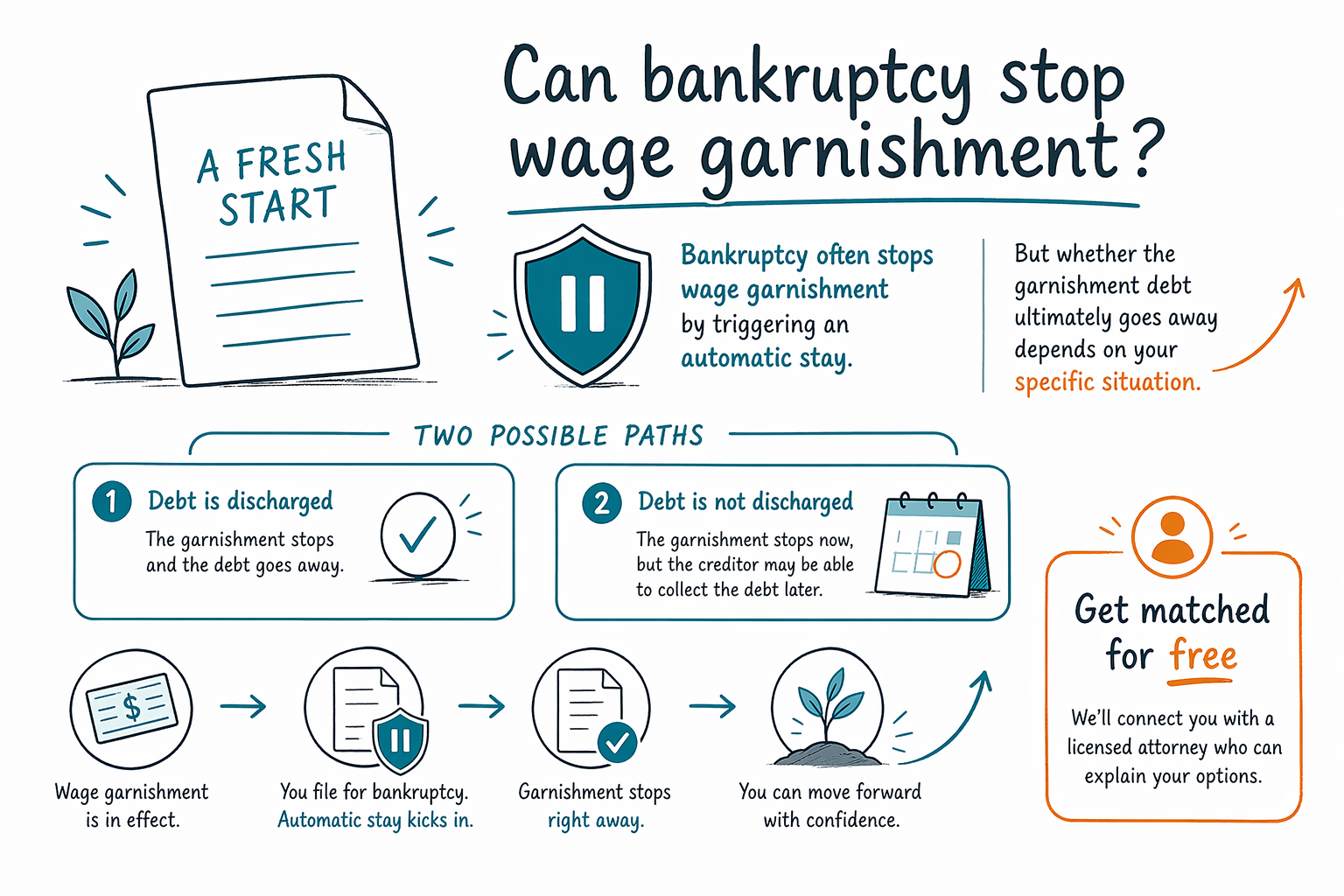
The short answer: bankruptcy can pause (and sometimes stop) wage garnishment
If you file a consumer bankruptcy case (Chapter 7 or Chapter 13), the court generally issues an order called the automatic stay right away. That stay is designed to pause most collection actions, including wage garnishment and many creditor collection efforts.
In many cases, the garnishment should be stopped after the filing, though it can take a little time for your employer and the creditor to process the notice. Your attorney (after you file) handles the paperwork and communicates with the parties involved.
Still, the effect can vary. Some garnishments are tied to certain kinds of debts, and some actions may have exceptions depending on federal law and the details of your situation. That’s why it’s important to confirm your specific facts with a licensed bankruptcy attorney in your area.
- Bankruptcy filing usually triggers an automatic stay that pauses garnishments
- Processing time can mean a short delay before payroll reflects the change
- Exceptions and details matter—get legal guidance for your specific debt and garnishment
Chapter 7 vs. Chapter 13: what each means for garnishment
Both Chapter 7 and Chapter 13 generally start with the same immediate idea: filing creates the automatic stay, which can pause garnishment. But the ongoing plan after that differs.
With Chapter 7, the case may be quicker, and the goal is typically to discharge (wipe out) certain types of eligible unsecured debt. Chapter 13 is different: it creates a court-approved repayment plan over time, and the stay works while you make plan payments.
Which chapter is right depends on your income, debts, and other factors, including whether the garnishment is for a debt that usually can be discharged or may survive bankruptcy. Your attorney will review the type of debt (and any deadlines) to explain your realistic options.
- Both chapters usually pause garnishment when filed (automatic stay)
- Chapter 7 is often about discharge of eligible debts
- Chapter 13 usually involves a repayment plan while the stay is in place
Debts that may survive bankruptcy (important limits)
Bankruptcy can help many people get relief from debt, but it does not erase everything. Some debts commonly survive bankruptcy or are harder to discharge, even if the garnishment is paused.
Examples often include most student loans (with limited exceptions), recent income taxes, child support or alimony, many court-ordered fines/penalties, and debts connected to fraud or certain misconduct. Also, some debts may have special rules depending on when they were incurred and how they were handled in court.
The key point: even if garnishment can be stopped right away, whether the underlying debt ultimately goes away depends on the specific type of debt and your case. A bankruptcy attorney can explain which parts may be discharged in your situation.
- Automatic stay can pause collections even when full discharge may not be available
- Many types of debt often survive, including student loans, certain taxes, and support obligations
- Your outcome depends on the exact debt and case details
What happens after you file: practical steps and timing
When you file, your lawyer will typically provide required notices and request that creditors stop collection activities. For wage garnishment, that usually means communicating with the creditor (and often directing your employer how to handle payroll after the stay begins).
It can take time for changes to reach your employer’s payroll system. If you’ve recently had wages withheld, you may also see some paperwork catch up during the first days.
If a garnishment is tied to a pending lawsuit or a judgment, the automatic stay may also pause other related actions. If you have notices, court documents, or letters showing what is being garnished and for what debt, bring those to your first consultation so your attorney can evaluate your options quickly.
- Filing creates the automatic stay right away in most cases
- Payroll updates may take a short time to reflect the stop
- Your attorney uses the case details and documents to guide what to stop and when
Rules vary by state and court district—confirm with a licensed attorney
Bankruptcy law is federal, but the process, exemptions, and certain practical details vary by state and sometimes by judicial district. That means two people in different states can have different results, even with similar debts.
Because of that, the safest next step is to talk with a licensed bankruptcy attorney near you and confirm (1) whether your specific garnishment should stop after filing, and (2) whether the debt itself is likely to be discharged.
CleanSlate Match is a free matching service that helps you connect with a licensed bankruptcy attorney in your area. We don’t file bankruptcy and we’re not your lawyer—an attorney will review your situation and advise you based on the real rules where you live. You can also confirm the attorney’s bar license directly through your state’s licensing authority.
- State and district rules can affect exemptions and the practical outcome
- A licensed attorney can confirm how the stay applies to your garnishment
- CleanSlate Match helps you get matched for free, but does not provide legal representation
How much does a bankruptcy consult cost? (Typical attorney fee ranges)
Many consumer bankruptcy attorneys charge a flat fee for the case work, plus required court filing fees and a small credit-counseling fee. The exact total depends on the chapter you file (Chapter 7 or Chapter 13), how complex your situation is, and what your local court requires.
As a general expectation, total attorney costs often fall somewhere in the flat-fee range of about $1,000 to $3,500, plus the court filing fee (commonly around a few hundred dollars) and the required credit-counseling fee. These are broad ranges, not quotes.
Be cautious of any claim that guarantees a specific outcome or promises all debt will be eliminated. Bankruptcy can provide a fresh start for many people, but outcomes depend on the individual facts. A qualified attorney can explain what is realistic and what isn’t for your garnishment and your underlying debt.
- Often: flat attorney fee + court filing fee + required credit-counseling fee
- Typical total ranges vary by chapter and complexity (not a guaranteed quote)
- No attorney can promise discharge of every debt or a specific outcome
Bankruptcy often stops wage garnishment by triggering an automatic stay, but whether the garnishment debt ultimately goes away depends on your specific situation—get matched for free to a licensed attorney near you.
Common questions
If I already have wages being garnished, will bankruptcy stop it immediately?
Filing bankruptcy usually triggers an automatic stay right away, which can pause wage garnishment. But payroll systems and paperwork can take a short time to update, so “immediate” can mean days rather than hours.
Will bankruptcy always eliminate the debt that caused the garnishment?
Not always. Even if bankruptcy pauses collection, some debts often survive or are not dischargeable in many cases (for example, many student loans, recent income taxes, child support/alimony, and certain court penalties). A bankruptcy attorney can assess your specific debt.
Does it matter whether the garnishment is from a judgment or from a creditor directly?
It can matter. Garnishment sources can have different procedural histories and may involve court judgments. A licensed attorney can review your paperwork to explain what the automatic stay can pause and what steps may be needed.
I’m new to the US—how do I find the right bankruptcy help quickly?
Start by gathering the notices you received about the garnishment and any court papers. Then get matched to a licensed bankruptcy attorney near you through CleanSlate Match for free, so you can discuss your chapter options and what the stay means in your situation.
Is CleanSlate Match a law firm that files bankruptcy for me?
No. CleanSlate Match is a free matching service, not a law firm and not your attorney. We help you connect with a licensed bankruptcy attorney in your area, and the attorney will handle the legal work.
Related help
A plain-language comparison of the two main consumer bankruptcies, when each makes sense, and how a lawyer helps you decide.
Open → What Debt Bankruptcy Can and Can't EraseWhich debts bankruptcy wipes out, which ones survive (like most student loans and child support), and why it matters.
Open → Will I Lose My House or Car in Bankruptcy?How exemptions and the two chapters affect your home and car — and why many people keep both.
Open →